A week before the US midterm elections, scheduled for November 3, 2026, discussions in India, Japan and France are focusing less on American domestic politics itself than on its impact abroad. In local commentary, Donald Trump’s America appears at once as a market that cannot be abandoned, a military ally whose reliability cannot be fully trusted, and a source of decisions capable of changing trade terms, energy prices and strategic calculations within days. The common thread running through these discussions is not whether Republicans or Democrats will win, but whether the elections will make Washington predictable again.
In France, the coming elections are seen above all as a test of the viability of American institutions. In its announcement of a major conference on the United States, the French Institute of International Relations describes the November vote as a test of Trump’s control over the country’s political landscape—and, in turn, over global geopolitics. The French perspective is particularly sensitive to the way the domestic campaign in the US is increasingly merging with international strategy: inflation and trade shocks are unfolding alongside the war against Iran. (ifri.org)
This concern goes beyond familiar European discontent with Trump. Experts at the French think tank IRIS warn that if the president’s party loses, accusations of election “theft” could follow, corroding US political culture. The key point in IRIS’s analysis is that France is watching not merely for a shift in the balance of power in Congress, but to see whether American democracy can still peacefully restrain executive power. (iris-france.org) Paris sees its own interests at stake, too: a country that aspires to lead Europe does not want to base the continent’s security on an American political system that may become even more personalized and confrontational.
Japan’s tone is different: there is less moral concern about the state of American democracy and more cool calculation about what will happen after the vote. The Japan Institute of International Affairs notes that if Trump loses his congressional majority, the White House could shift its political focus from domestic affairs to foreign and military policy—areas where Congress places fewer limits on the president. The institute’s analysis explicitly warns of a more active policy toward Iran and China during the president’s “lame-duck” period [when he has lost political support in Congress]. (jiia.or.jp) For Tokyo, this is no abstraction: any US deal with Beijing focused only on long-range missiles or a trade compromise could leave Japan alone to face regional threats, especially North Korean missiles.
Indian writers view the same American uncertainty through the cost of access to the US market. In New Delhi, a possible Democratic victory is not seen as automatically reversing Trump’s tariff policy. Economist Neelanjan Banik warns in a column for BasisPointInsight that a divided Congress will not shield India from tariffs, because Washington’s current system of pressure relies not on a single law but on a combination of “national security” tariffs, trade investigations, and targeted restrictions on countries and sectors. (basispointinsight.com) This is a fundamental point in the Indian debate: the problem for India is not the identity of the US president, or even the size of a particular tariff, but the use of access to trade as a tool of political bargaining.
That is why calls are growing louder in India to avoid trading long-term concessions for short-term promises. Ajay Srivastava, a former trade official and founder of the Global Trade Research Initiative, put the position plainly: India should not offer new concessions while its agreement with the US remains unfinished. The Indian Express quoted him. (indianexpress.com) This response is not anti-American; it reflects a lesson from recent months: even if New Delhi lowers its barriers and increases purchases of American goods, legal and political changes in Washington can quickly deprive those concessions of their expected benefits.
The French response to tariffs is similar in its diagnosis, but broader in scope. For Paris, this is not a bilateral deal but a question of the European Union’s political agency. After the transatlantic agreement was signed, Europeans hoped for at least a pause in the conflict. But Trump’s new threats to raise tariffs over European regulation of American technology companies once again exposed how fragile that stability is. As Le Monde noted, European diplomats have learned not to panic over each new statement from the White House, yet this very calm has become “almost alarming”: constant threats have become the norm. (lemonde.fr) India’s demand for guarantees and France’s growing habituation to threats are two forms of the same response to an America where an agreement does not necessarily mean the end of bargaining.
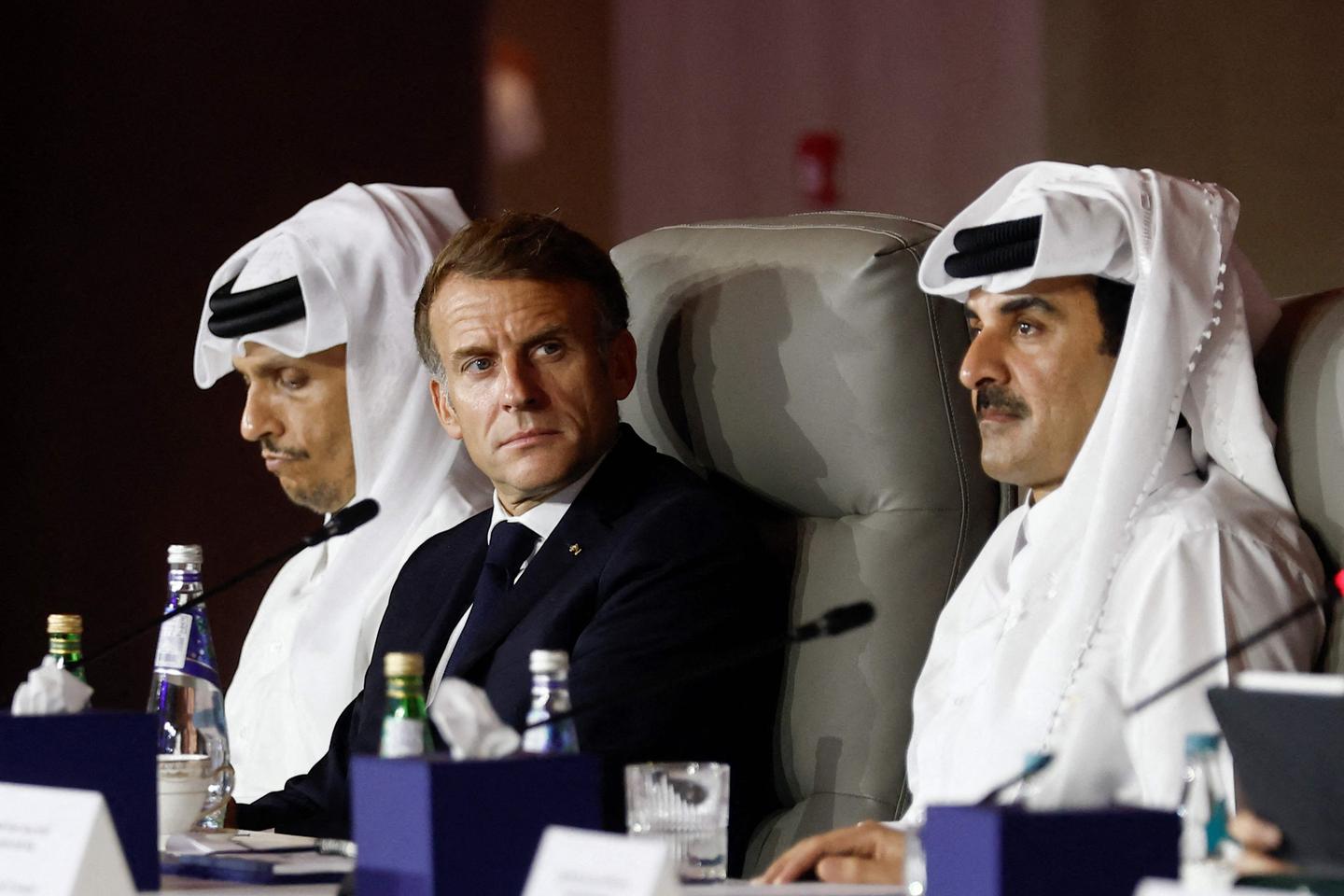
The most serious shared concern is Iran and the Strait of Hormuz. Here, the differences between the countries are especially clear. In France, the conflict has become part of everyday politics: while visiting Gulf countries, President Emmanuel Macron linked the crisis’s future course to two points on the calendar—the US elections and Trump’s readiness to expand the war again afterward. He also sharply dismissed American comments about the situation in France as “unacceptable and stupid.” Le Monde emphasizes that the prolonged blockade of the Strait of Hormuz is pushing up fuel prices in France while also exposing the impotence of Paris and Arab capitals in the face of the US-Iran confrontation. (lemonde.fr)
For Japan, Hormuz is an even more direct national security concern. Japanese commentators point out that a blockade of the strait threatens energy supplies; it is not some distant Middle Eastern drama. In a Kyodo report, the US-Israeli war against Iran is described as a conflict with no visible way out, while a possible closure of Hormuz is identified as a grave strategic threat to Japan. (kyodo.co.jp) Tokyo therefore has no illusions that a Republican defeat would itself bring a de-escalation. On the contrary, a president weakened at home may seek to project strength abroad.
India’s perspective is even more pragmatic and, in some ways, unexpected. New Delhi is used to balancing between Washington, Moscow and the Gulf countries, but war makes that balancing act more costly: energy routes, oil supplies and prices for Indian households are now tied to decisions over which India has little influence. At the same time, the US is linking trade negotiations to India’s relations with Russia. A column in ThePrint argues that Washington is seeking concessions not only on access to the Indian market for agricultural goods, but also on Russia; the author urges New Delhi to negotiate without fear. (theprint.in) For India, American policy looks like a single package of pressure: trade, sanctions, oil and geopolitical alignment are no longer separate issues.
The most important common feature of these countries’ responses is that none expects a simple return to the old status quo. France hopes American checks and balances will be restored, but fears that Trump’s domestic weakness will make his foreign policy more aggressive. Japan is less concerned about a change in which party controls Congress than about Washington striking deals in Asia without adequately considering its allies’ interests. India believes its trade relations with the US should be protected not through personal ties between leaders, but through market diversification and clearly defined commitments.
America remains indispensable to all three countries—as a buyer, an ally, a technology hub and a military power. But one conclusion is increasingly clear in Indian, Japanese and French commentary: the main problem with the US today is not that it acts too aggressively, but that its partners can no longer be sure which rules will apply tomorrow.