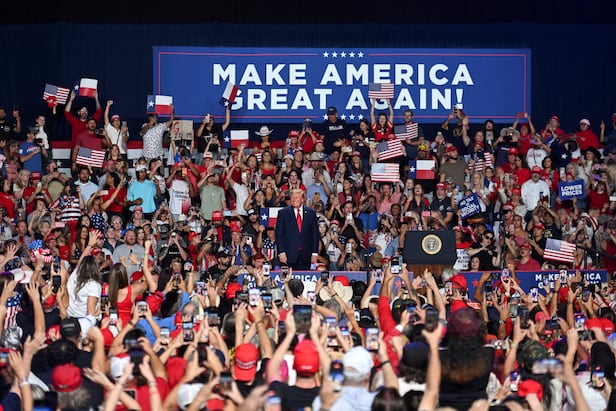
As of October 17, 2026, the main American issue provoking reactions in India, Ukraine and South Korea was not Washington’s abstract struggle with Russia, but its sharp turn toward a policy in which the energy costs facing American voters matter more than previous sanctions principles. Donald Trump’s October 16 decision to suspend the application of some sanctions and tariffs under legislation targeting Russia and Iran—following an agreement to supply Russian diesel to the United States—was interpreted very differently in the three countries, but led to a common conclusion: American policy is becoming increasingly transactional, situational and tied to the domestic electoral climate. (chosun.com)
In India, the reaction almost immediately turned into a discussion of double standards. Indian commentators point out that only recently Washington threatened countries—above all India and China—with tariffs of up to 100% for making large purchases of Russian energy. Now, however, the White House is effectively opening the door to Russian diesel because fuel prices in the United States have become a politically sensitive issue ahead of the November 3 midterm elections. The editorial board of The Indian Express expressed Indian frustration in especially clear terms: New Delhi has the right to demand that its energy needs and costs be assessed “by the same standards” as Washington’s needs. (indianexpress.com)
The significance of this reaction goes deeper than yet another dispute over oil. For India’s political and expert community, the events confirm the basic doctrine of strategic autonomy: a country of more than 1.4 billion people cannot allow an external partner to determine where it should buy its energy. Indian analysts do not regard even a temporary lifting of the threat as a victory. The GTRI research group warns that the relaxation provides only short-term relief without eliminating uncertainty, and therefore India should continue making purchases on commercially advantageous terms and should not mistake the American concession for a lasting guarantee. ThePrint Hindi presents this position precisely as a call to protect energy security, rather than as a reason for diplomatic optimism. (hindi.theprint.in)
Indian strategist C. Raja Mohan, in a column for The Indian Express, offers an even more unexpected perspective. He calls Washington’s hypocrisy obvious, but sees it not as an exception, rather as the norm in international politics: “all politics is local.” For New Delhi, this means that a possible rapprochement between the United States and Russia could even reduce pressure surrounding Russian oil, while simultaneously making the global system less predictable. India’s debate, therefore, is not reducible to an anti-American reaction: it is pragmatic and almost coldly realist. The United States is seen as an important partner, but one whose rules apply only as long as they coincide with its current domestic interests. (indianexpress.com)
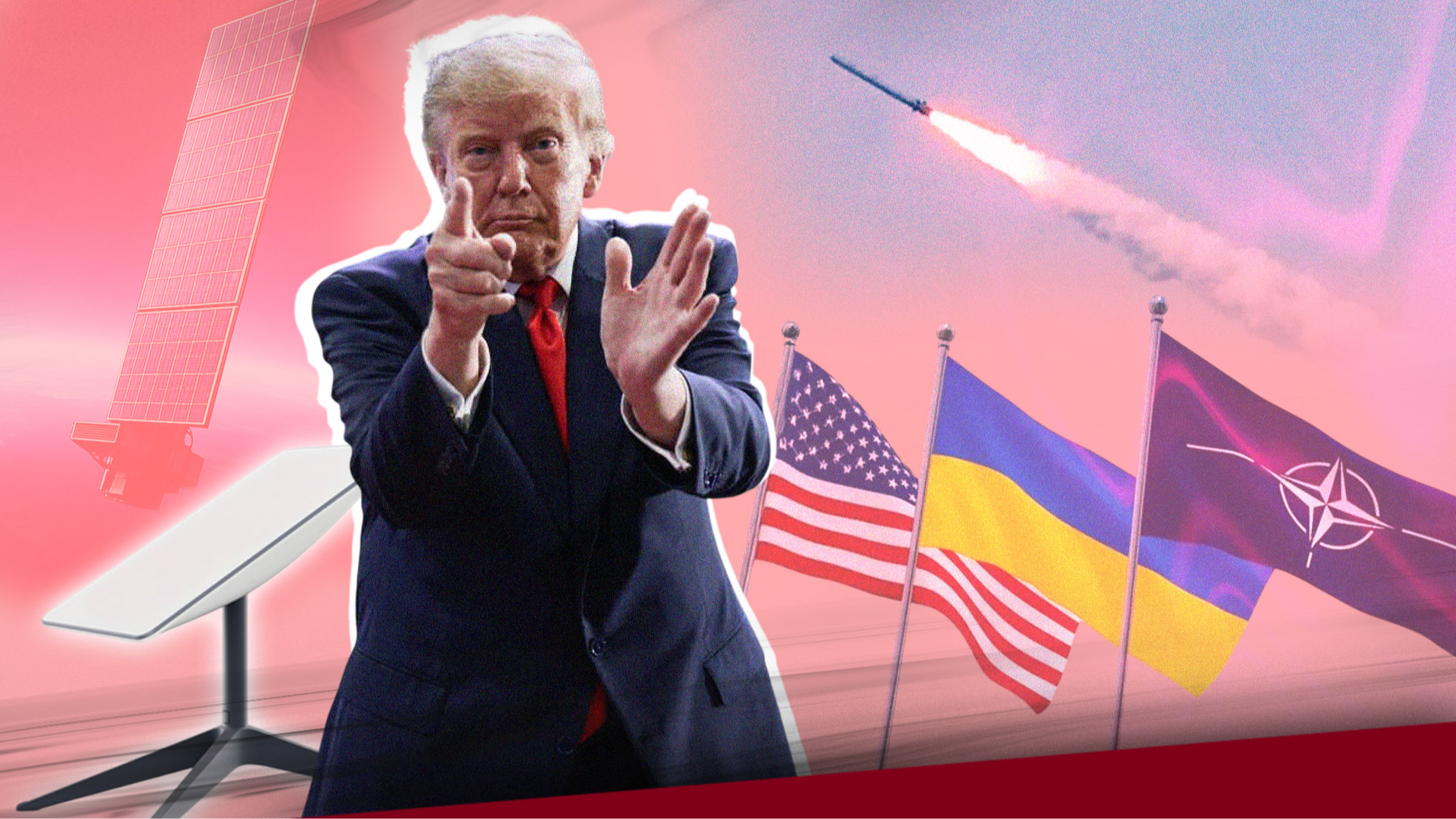
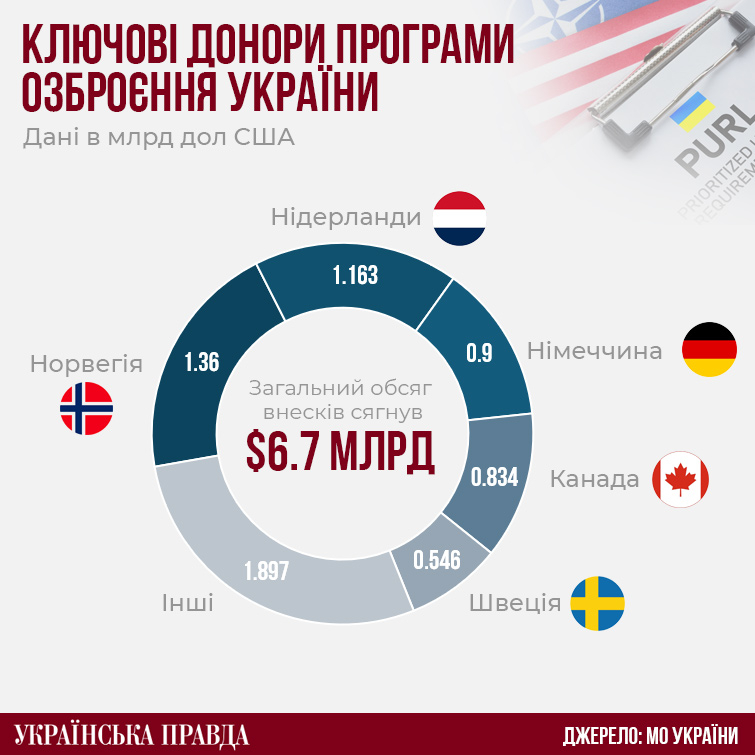
For Ukraine, the same news looks not like hypocrisy but like a direct strategic threat. Ukrainian media link the lifting of restrictions, the Russian diesel deal and pressure on Kyiv into a single narrative: while trying to reduce fuel costs at home, the United States is demanding that Ukraine stop striking Russian oil refineries—that is, one of the few tools Kyiv has to constrain Russia’s war economy. In an analysis by Ukrainska Pravda, this mechanism is described as the “three elements of US pressure” on Ukraine: intelligence, the PURL weapons-purchasing program and Starlink. This is not simply a diplomatic disagreement, but a reminder of how heavily Ukraine’s military resilience depends on American technological and intelligence channels. (pravda.com.ua)
Kyiv found the logic behind the American demand particularly painful. If strikes on Russian oil refineries raise diesel prices in the United States, Ukraine is effectively being blamed for American consumers’ inconvenience—regardless of the fact that Russia continues its war and strikes Ukrainian energy infrastructure. Volodymyr Zelenskyy responded with a principle of reciprocity: if Moscow wants attacks on its oil facilities to stop, it should stop attacking Ukraine’s energy infrastructure. This position was reported by Yevropeyska Pravda: Kyiv does not reject an energy ceasefire as an idea, but refuses to turn it into a one-sided ban imposed on Ukraine. (eurointegration.com.ua)
The Ukrainian reaction therefore differs markedly from India’s. In India, American inconsistency is an argument in favor of freedom of maneuver. In Ukraine, it is seen as a risk that an ally is prepared to trade away part of Ukraine’s defense strategy for lower prices at the pump ahead of the elections. Even Trump’s decision to suspend sanctions measures against Russia is interpreted by Ukrainian commentators as a signal that the American administration may be more interested in a quick deal and cheap fuel than in consistently weakening Russia’s military potential. (pravda.com.ua)
In South Korea, the American issue is developing along a different trajectory but leads to the same sense of dependence on an American deal. Seoul is watching as trade concessions become increasingly openly linked to investment in American industry, energy and shipbuilding. Trump said that South Korea must pay for lower tariffs, highlighting $150 billion in investment in American shipbuilding; at the same time, major investments in US energy, including an LNG project in Alaska, are being discussed as part of the agreements. Chosun Ilbo reports on how directly the American president links access to a more favorable trade regime with Korean capital investment in the United States. (chosun.com)
South Korea’s distinctive feature is that American pressure is rarely described here as a rupture in the alliance. It is more often perceived as the alliance’s new price. For a country whose export economy is closely tied to the United States and whose security rests on an American military presence, the issue is not whether it can simply say “no,” but whether it can turn compelled concessions into access to American supply chains, defense contracts and energy assets. Accordingly, statements about Korean investment in American infrastructure are read in Seoul both as a commercial opportunity and as a bill presented to an ally. Hankyoreh noted that Trump presented expanded Korean participation in American energy projects as proof that the “deal” with Seoul was becoming increasingly advantageous—first and foremost, of course, for the United States. (hani.co.kr)
Against this backdrop, the US war with Iran and the surge in oil prices are heightening South Korean anxiety. For India, expensive oil is an argument in defense of Russian purchases; for Ukraine, it is the reason Washington is pressuring it over attacks on Russian energy infrastructure; for South Korea, it is a reminder of the structural vulnerability of an import-dependent economy. South Korean debate links the Middle East conflict, American inflation, trade deals and national industrial policy into a single chain. Even the American midterm elections become an external economic factor here: if the White House is seeking quick ways to bring down energy prices and demonstrate an inflow of investment, Korean corporations must take this into account when planning multibillion-dollar projects. (chosun.com)
The common international conclusion drawn from the Indian, Ukrainian and South Korean reactions is a harsh one. America does not cease to be a key power for any of the three countries, but the nature of that power is changing. For India, the United States increasingly looks less like a moral arbiter and more like a negotiator whose interests must be weighed and the cost of pressure demonstrated. For Ukraine, it remains an indispensable partner, but its support is becoming ever more dependent on American domestic politics. For South Korea, the United States remains a military ally and crucial market, but the alliance is now increasingly accompanied by an investment bill and a tariff ultimatum.
The most important local observation is that New Delhi, Kyiv and Seoul no longer expect Washington’s rules to remain unchanged. They are trying to adapt to an America that simultaneously demands sanctions discipline, buys Russian diesel, pressures allies with tariffs and uses energy projects as an instrument of geopolitical loyalty. The only difference lies in their reserves of resilience: India responds with strategic autonomy, Ukraine with an effort to prevent its defense from becoming a bargaining chip, and South Korea with the costly adaptation to the American model of an “alliance as a deal.”