In recent weeks, the image of the United States in Australian, Israeli and Chinese debates has come to revolve around one shared concern: Washington remains a country capable of instantly changing the military and political situation, but it is becoming increasingly unpredictable in answering the main question facing both allies and rivals—what will the next step be, and who will pay for its consequences? The main catalyst for this concern is the American war and negotiations with Iran, which have once again threatened shipping through the Strait of Hormuz, global energy prices and confidence in American guarantees. For Australia, this is primarily the risk of being drawn into someone else’s conflict and a blow to trade; for Israel, it is the fear that the White House will conclude an agreement that does not eliminate the Iranian threat; for Chinese authors, it is convenient—but not merely propagandistic—evidence of America’s strategic overextension. (abc.net.au)
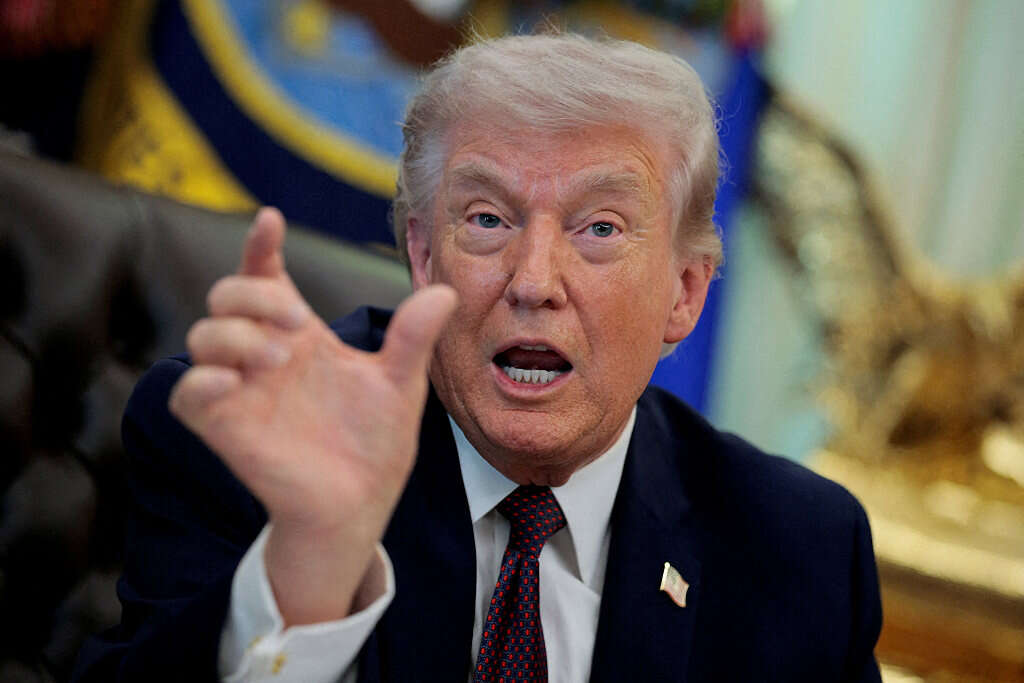
The most prominent common theme is doubt that Donald Trump is in control of the crisis he himself helped create. ABC international affairs correspondent Matthew Doran describes American policy as oscillating between the threat of a full-scale war and an attempt to return to negotiations without a clear objective or a convincing exit plan. In the Australian reading, the issue is not only Iran but also the Strait of Hormuz: Tehran can affect the global economy not through a symmetrical military response, but by controlling a maritime chokepoint through which oil, gas and fertilizer are transported. ABC international affairs editor Laura Tingle put the local conclusion particularly bluntly: the strategic advantage in this conflict has turned out to lie not with the United States but with Iran—because Tehran has managed to turn the energy market into a lever of pressure. From this perspective, American power has not disappeared, but it no longer automatically produces a political result. In ABC’s analysis, Doran notes that contradictory interpretations of the interim agreement made a new spiral of escalation almost inevitable; Tingle calls control over energy flows Iran’s main trump card. (abc.net.au)
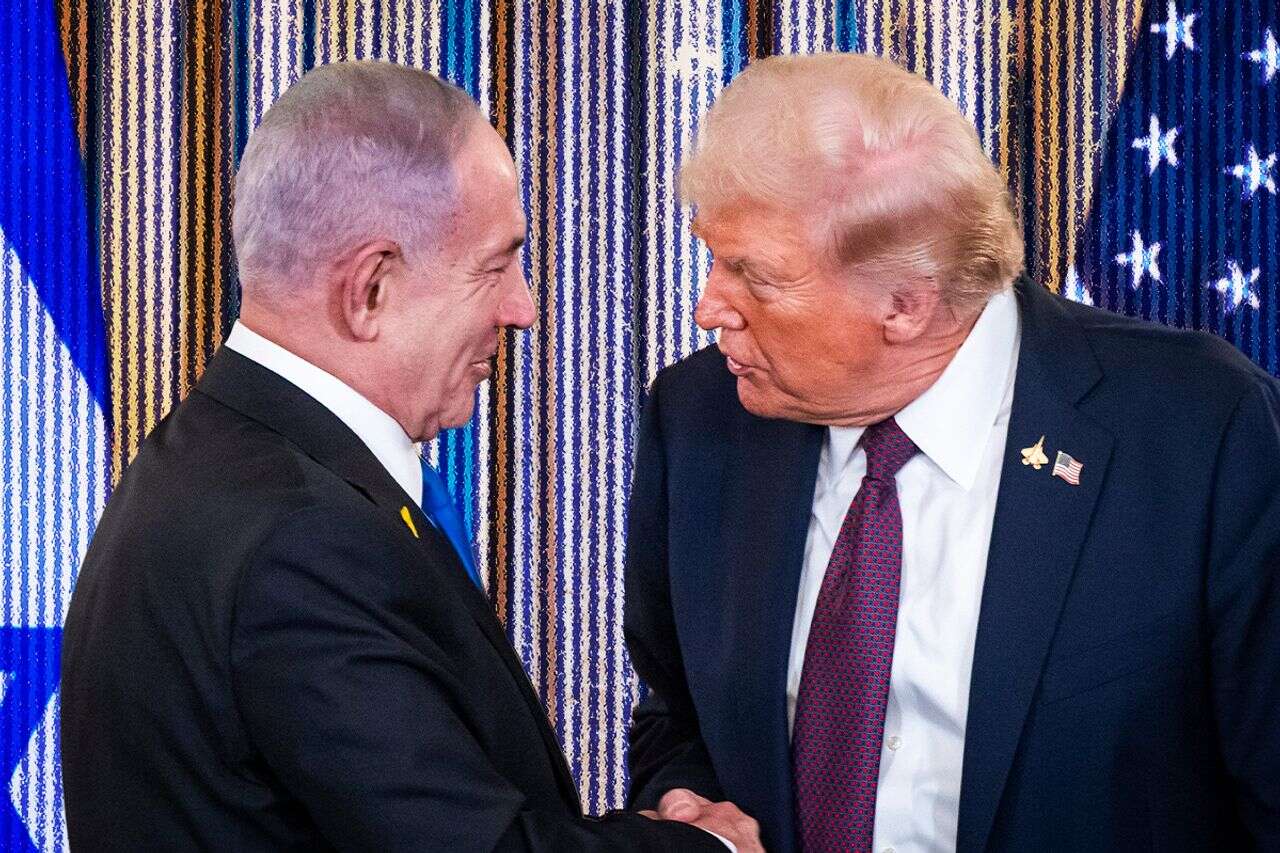
In Israel, the same White House inconsistency is perceived much more painfully, because the issue here is not reducible to the price of a barrel of oil. Israeli debate is divided not between being “for” or “against” the United States, but over whether the US can be trusted to determine the war’s ultimate objective. Times of Israel reported an assessment by sources in Jerusalem that diplomacy with Tehran would probably fail, eventually forcing Trump to raise the stakes again. At the same time, right-wing Israeli commentators fear the exact opposite—that the president will choose a deal allowing him to declare victory ahead of the US midterm elections while leaving Israel with a long-term problem. Mark Zell, chairman of the Republicans in Israel, directly links the Iran pause to the American electoral calendar in a column for Times of Israel, but views it not as an abandonment of Israel, but as a political calculation in a year when Republicans hold the House of Representatives by a razor-thin majority. (timesofisrael.com)
Yet a more troubling voice for Israel is coming from the right, where the customary admiration for Trump is giving way to demands for strategic independence. Professor Eyal Zisser argues in an article for Israel Hayom that Trump’s contradictory statements have narrowed Israel’s freedom of action and that the country should defend its own positions even at the cost of tension with Washington. This idea is particularly revealing: Israeli circles are no longer merely worried about American weakness, but about American “deal-making.” When Trump says a negotiated solution is “smarter” than continuing the war, Jerusalem hears not only a promise of de-escalation, but also the risk that the United States will trade fundamental demands for a quick end to the crisis. Israeli sources commenting on the presumed compromise over the nuclear program called it “bad news” and warned that such an agreement could merely start the countdown to the next war. (timesofisrael.com)
China’s reaction is structured differently: it expresses almost no concern about alliance relations with Washington, instead consistently turning America’s difficulties into evidence of the limits of US hegemony. Xinhua reports describe the war with Iran as a “quagmire” in which military spending, high oil prices and pressure from the midterm elections are undermining the internal stability of the Trump administration. The Chinese narrative emphasizes the contradiction within “America First”: a president who promised not to drag the country into endless wars and to lower the cost of living has become tied to a conflict that is driving up both spending and prices. This is not a neutral analysis: Beijing uses it to contrast America’s force-based approach with its own rhetoric of stability and multipolarity. But an important substantive element of the Chinese assessment is also worth noting: a prolonged Middle Eastern war diverts scarce US military resources and political attention from the Indo-Pacific region. Australian expert Warwick Powell calls this a “classic imperial dilemma” in the Chinese publication Guancha: the United States cannot easily acknowledge failure, but by avoiding it, risks becoming mired even more deeply. (news.cn)
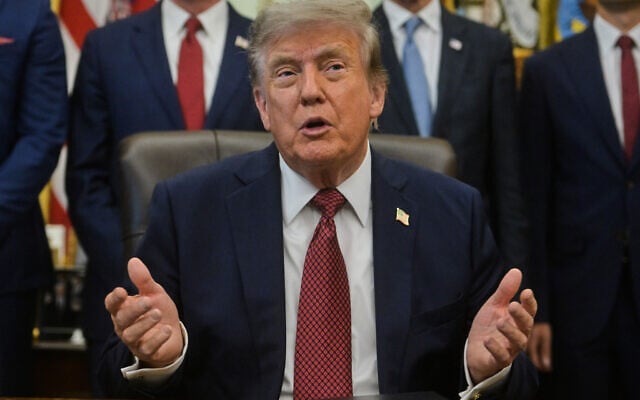
For Australia, American unpredictability already carries a tangible cost. Canberra initially supported the American objective of preventing Iran from acquiring nuclear weapons, but later declined to join the US military effort in the Strait of Hormuz unconditionally. When Trump publicly reproached Australia for providing insufficient assistance, Defense Minister Richard Marles replied that any actions had to be consistent with “Australia’s national interests.” Behind this formula lies an important shift: even one of the United States’ closest allies is trying to separate support for American strategy from an obligation to automatically participate in every Washington operation. Australian commentators have also linked the war to the vulnerability of Australia’s own forces and bases in the Middle East, while the government has focused on risks to growth, inflation and the energy market. ABC’s report on Canberra’s response shows that the dispute with Trump has become not an episode of diplomatic rhetoric, but a test of the limits of ANZUS solidarity. (abc.net.au)
The second Australian issue—trade—reinforces this feeling. In July, the United States imposed a 12.5 percent tariff on Australian exports, citing concerns about compliance with laws on goods produced using forced labor. The Australian business council called the measure unfounded and warned of declining investment and threats to jobs. In the local perception, what is particularly irritating is not only the size of the tariff, but the principle behind it: an alliance with the United States provides no immunity from economic pressure. ABC reports Westpac’s assessment that the tariff itself may have only a minor effect on US macroeconomic indicators, but will increase uncertainty for businesses and consumers. This brings the Australian debate closer to the Chinese one: in both countries, America is seen as a power willing to use access to its market as a political instrument, although China describes this as a systemic feature of the American order, while Australia sees it as an unwelcome gap between allied promises and practice. (abc.net.au)
That is precisely the main international conclusion. Australia is not abandoning the United States, Israel has not stopped needing American power, and China has not stopped viewing the US as its main strategic competitor. But all three countries are increasingly discussing America not as a stable center of order, but as a variable source of risk. Australians are asking how far an ally can go in a war about which it did not warn its partners; Israelis are asking whether the president might trade long-term security for a short-term political victory; and Chinese authors are asking whether the Middle Eastern “quagmire” could accelerate America’s relative decline. Paradoxically, this is what unites such different societies: today they view Washington not only as a source of protection, threat or rivalry, but as a country whose decisions are becoming increasingly difficult to predict—and increasingly costly to ignore.