In recent days, the United States has been discussed in South Korea, Japan and Russia mainly in connection with two interrelated stories: the protracted US-Iran war and the threat it poses to shipping in the Strait of Hormuz, and Washington’s unexpectedly softer tone toward Moscow amid the war in Ukraine. In both cases, the local response comes down to one question: can America be a military superpower, a reliable ally and a predictable economic partner all at once—or is its foreign policy increasingly dictated by Donald Trump’s short-term domestic political calculations?
For Tokyo and Seoul, the Iran story is not an abstract Middle East drama but an immediate test of energy security. In an October 14 analysis, Japan’s JETRO directly links the deterioration in the situation after US-Israeli strikes on Iran to disruptions in transit through Hormuz and shifts in trade flows. This is especially sensitive for a country whose industry and consumer prices are vulnerable to fuel-price spikes. Japan’s debate, then, is not limited to a moral assessment of US actions: it is pragmatic and anxious. America appears less a defender of the international order than a power whose decisions turn oil, freight and cargo insurance into political weapons.
In South Korea, the logic is similar, but the conclusion is tougher. Experts at the East Asia Institute, in an assessment of geopolitical risks, advise Seoul to prepare for possible US demands that it join a maritime escort coalition, impose sanctions or provide material assistance. But the recommended course is not automatic involvement in the US campaign; it is “selective cooperation” through information-sharing and maritime security. This is an important shift in South Korea’s tone, though it is not always apparent from the outside: the alliance with the United States remains the foundation of security against North Korea, but participation in a distant American war is increasingly seen as something less than an unconditional duty.
The South Korean press ties Washington’s foreign policy even more closely to US elections. Hankyoreh describes Trump as a leader whose negotiating position is weakening ahead of the midterm elections because of the protracted conflict, while Chosun Biz notes that, according to sources, Tehran is deliberately dragging out negotiations in the hope of hurting Trump through high energy prices. In this reading, the war is no longer a dispute over Iran’s nuclear program: it has become a struggle over the price of diesel in the United States, White House approval ratings and control of Hormuz. For America’s Asian allies, this is an unsettling signal: their own economies are becoming dependent on the US election calendar.
Russia’s response to the same war is notably different. Moscow is using the crisis to reinforce the image of the United States as the party that initiated the escalation, while avoiding direct confrontation with Washington and seeking to play the role of mediator. After talks in Tehran, Foreign Minister Sergey Lavrov said that the crisis was caused by military action by the United States and Israel; Vedomosti covers his position in detail. However, Russia’s stance does not amount to unconditional support for Iran. The same article emphasizes that Moscow wants Iran to be stable and independent, and able to meet its strategic partnership commitments. In other words, Russia sees the conflict not only as an ideological dispute with America, but also as a risk of losing an important regional partner.
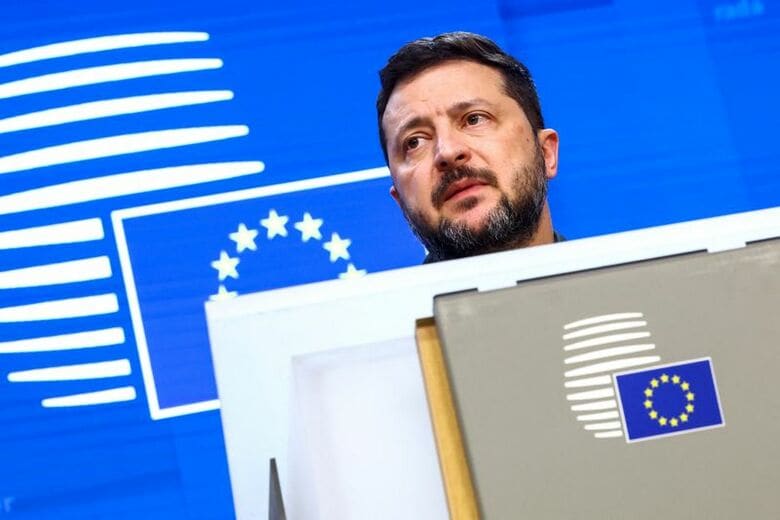
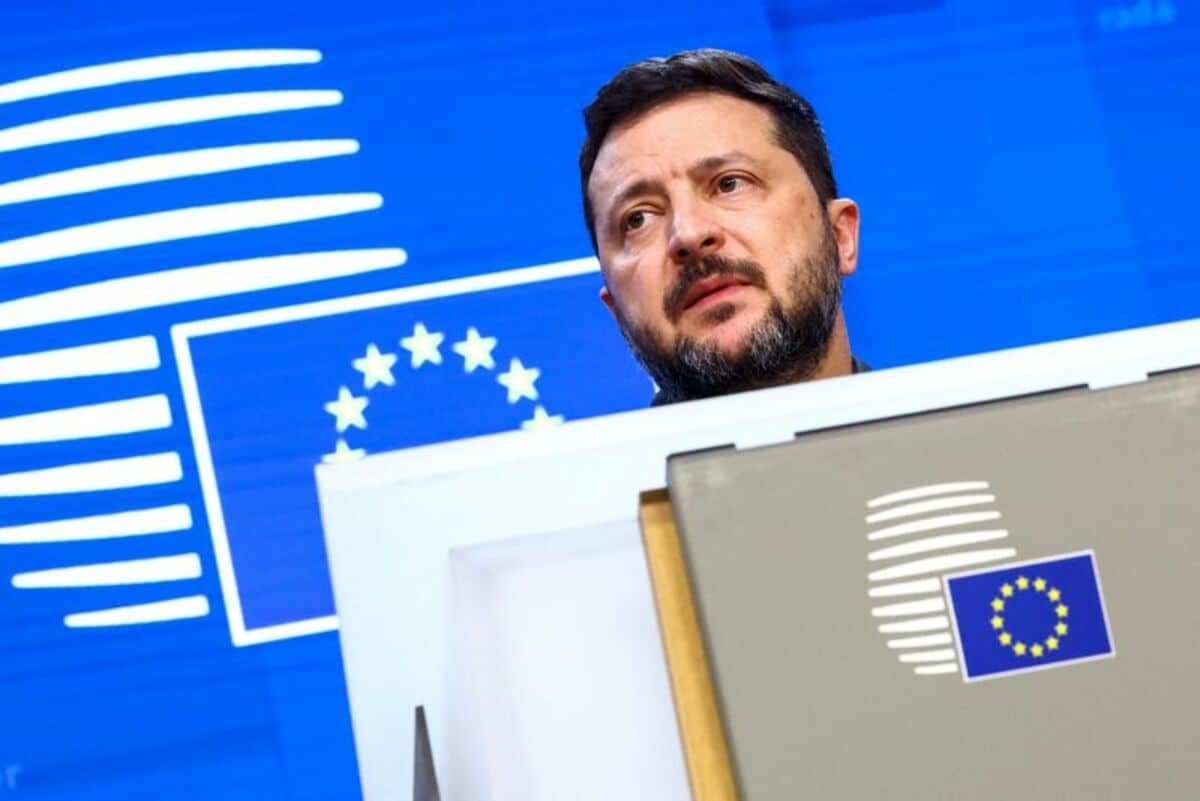
The most unexpected point of convergence among the three countries is their view of American policy as increasingly transactional. This has been especially evident in Japan’s reaction to the US rapprochement with Russia. An editorial in Asahi Weekly puts it bluntly: “America’s policy of appeasement toward Russia is selfish and plays into the aggressor’s hands” [translation]. The editorial was prompted by Trump’s moves, including an agreement to supply Russian diesel fuel. Ukrainian President Volodymyr Zelensky warned that such trade “puts money in Putin’s pocket”; his remarks were reported by Japan’s Newsweek Japan. For Japanese audiences, the issue is not only Ukraine. If the United States is willing to ease pressure on Russia to lower domestic fuel prices, how firmly will it honor its commitments in the Indo-Pacific, where Tokyo relies on US deterrence against China and Russia?
That is why Japanese analysis brings the Iran war and Ukraine together as a single problem of trust in an ally. The US operation in the Middle East creates an energy shock, and then, seeking to soften the impact at home, Washington turns to Russia for fuel and puts pressure on Kyiv. To Tokyo, this looks like a dangerous cycle: an ally first creates global instability, then asks its partners to adapt to the consequences. It is no coincidence that the Japan Research Institute (JRI) wrote this summer that the Hormuz crisis had exposed two fundamental vulnerabilities in Japan’s energy security: its dependence on external routes and the need to coordinate its response not only with the United States, but also across its own government and industry. (jri.co.jp)
In Seoul, the Ukraine story is viewed through the same lens, although it feels less immediate than the risk of war on the Korean Peninsula. South Korea’s JoongAng Ilbo notes that Russia sees US concessions as a sign that Western support for Ukraine is breaking down, while Zelensky, the paper suggests, has begun publicly arguing with Trump because he sees this as his last chance to issue a “tsunami warning” [translation] before a complete break. South Korea’s concern is twofold: concessions to Moscow could shift the balance of power in Europe, but even more troubling is the precedent of the White House tying its support for an ally to the personal loyalty of that country’s leader and to the state of the US fuel market.
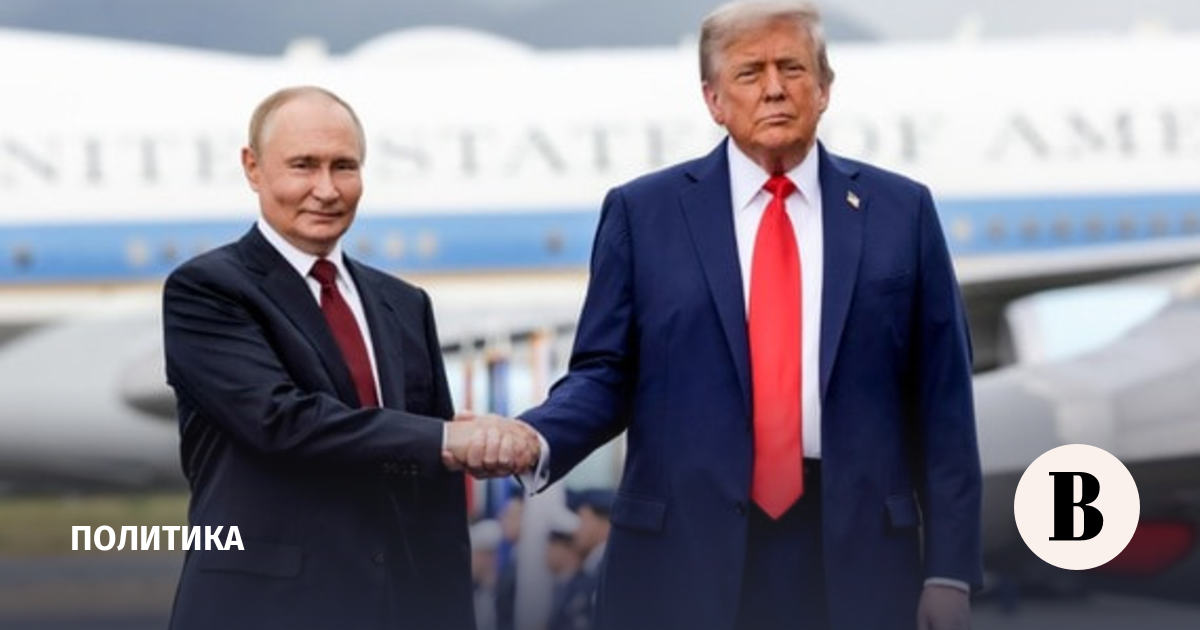
Russia’s public narrative, by contrast, presents American softness toward Moscow and its confrontation with Iran as evidence that Washington acts opportunistically rather than on principle. On October 21, Trump said he highly valued Russia’s position on Iran, after Vladimir Putin called on the United States to reach an agreement with Tehran, Vedomosti reported. For Russian audiences, this is presented as a diplomatic success: the United States has to reckon with Moscow both on Ukraine and in the Middle East. But a more sober assessment is visible beneath this optimistic framing. Political scientist Andrey Koshkin, in an RBC analysis, described Trump’s actions as more like an impulsive “juggling of old and new methods” [translation] than a consistent strategy. The point matters: even in Russia, where the current US course is sometimes seen as an opening, American unpredictability is regarded not as an asset but as a source of risk.
The overall conclusion in Seoul, Tokyo and Moscow is paradoxical. No one doubts that the United States retains enormous military, financial and diplomatic power. But more and more commentators are judging that power by how manageable it is. Japan fears that a short-term US deal with Russia could undermine the security of its alliances; South Korea wants to preserve its alliance without automatically becoming involved in wars Washington is waging far from East Asia; Russia seeks to benefit from American contradictions, but does not fully trust a country capable of shifting within a few weeks from sanctions pressure to a search for compromise. In local debates, America today looks not like a fading superpower, but like a superpower whose decisions are becoming more costly for friends, more advantageous to tactical rivals and increasingly difficult for everyone to predict.