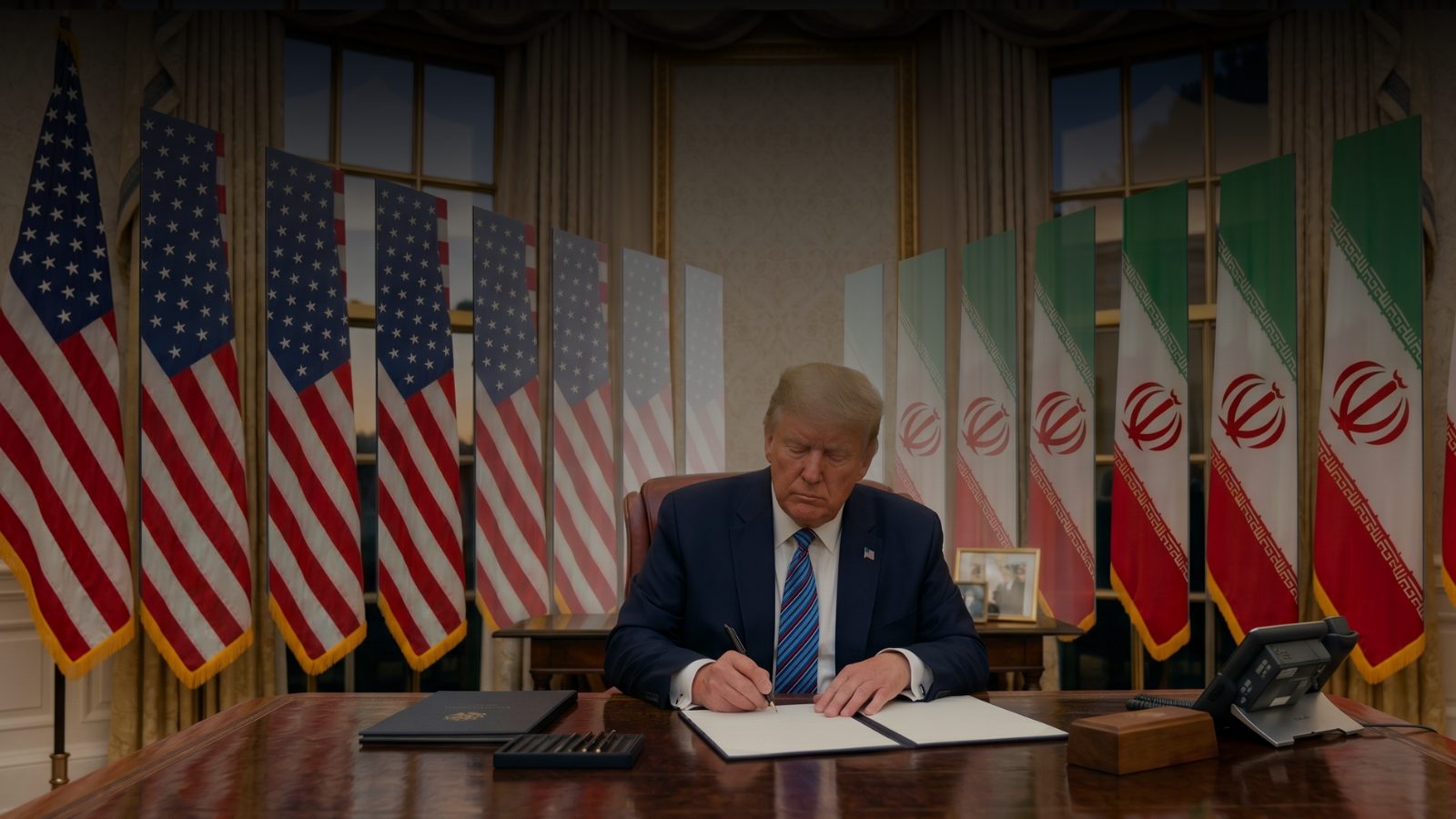
Discussions of the United States in China, Turkey and Israel in recent weeks have been dominated not by any single storyline, but by a common question: Can America simultaneously be a military superpower, a guarantor of its allies and a predictable economic partner? The immediate trigger has primarily been the ongoing U.S.-Iranian confrontation over the Strait of Hormuz, but it has quickly been joined by trade and technology restrictions targeting China and Israeli concerns about how far Washington is prepared to go to ensure the security of its closest regional ally. In all three countries, the United States is still seen as the decisive power, but increasingly less as a power whose promises automatically translate into a long-term strategy.
The most prominent common theme is U.S. policy toward Iran. Chinese commentators describe it as demonstrating not so much the limits of American strength as the limits of American coercion. In a Global Times analysis, Li Haidong, a professor at the University of International Relations, interprets the exchange of blows between the United States and Iran not as a path to a major war, but as a struggle for the initiative in the Strait of Hormuz. His reasoning is revealing: Tehran is seeking to consolidate its own control over the strategic waterway, while Washington is using limited military action to restore freedom of navigation and deterrence. The Chinese perspective here is fundamentally pragmatic: the longer the parties use force to improve their negotiating positions, the more fragile both shipping and the global energy market become. (globaltimes.cn)
In Beijing, this is also viewed through a broader geopolitical lens. Chinese experts stress that a prolonged conflict in the Persian Gulf benefits none of the participants, and that strikes and retaliatory actions serve as a means of applying pressure ahead of negotiations. In a commentary on tensions in the Middle East, Tian Wenlin, a professor at Renmin University, notes that judging by the course of events, both sides are using military pressure specifically to force the other into dialogue. Behind this lies an important Chinese idea: the United States can inflict serious damage, but the use of force alone cannot create a stable political order. (globaltimes.cn)
The Turkish view is close to the Chinese assessment of the danger of escalation, but is noticeably more practical. For Ankara, Hormuz is not an abstract test of American leadership, but a potential blow to energy prices, inflation, the balance of payments and regional trade. In an analysis by Anadolu Agency, Bilgehan Alagöz, an academic, calls the new phase in U.S.-Iranian relations “controlled escalation.” This is an accurate formulation of Turkey’s concern: the parties do not want an all-out war, but each may believe that a small increase in the stakes will strengthen its position. For Turkey, such a game is particularly dangerous because the “controllability” of great powers in practice means an uncontrollable rise in costs for neighboring economies. (aa.com.tr)
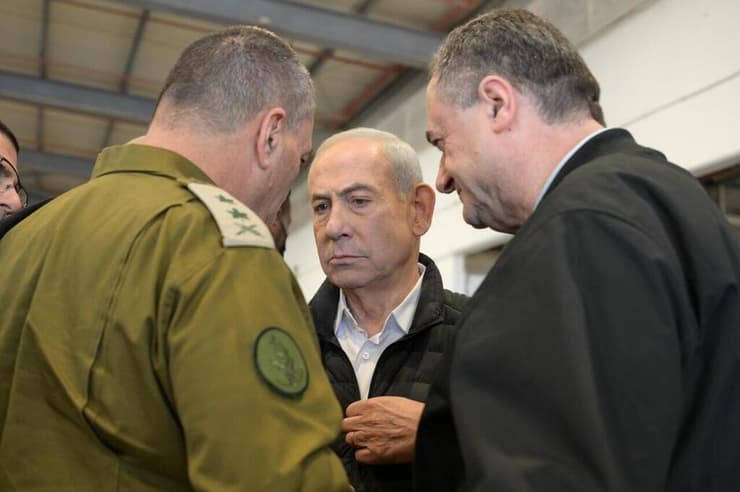
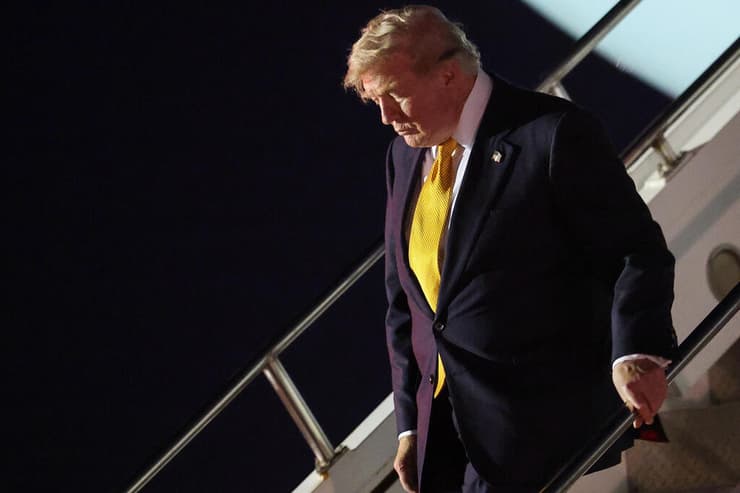
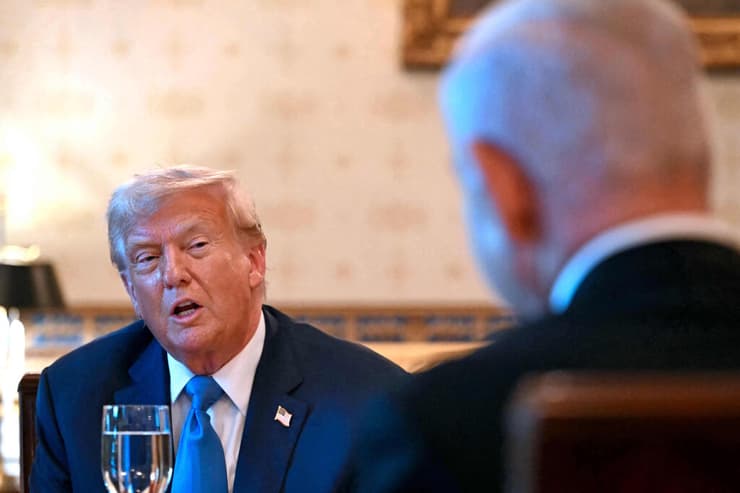
The Israeli debate is far more emotional, since the dispute is no longer only about oil and sea routes, but also about trust in the United States as a strategic ally. Israeli commentators interpret American pauses in its strikes, negotiating maneuvers and willingness to discuss a compromise with Iran as a signal that Washington wants to end the crisis on terms primarily dictated by its domestic politics, economic concerns and desire to avoid a major war. In a Ynet commentary, Itamar Eichner writes that Donald Trump is effectively negotiating with Tehran “with the help of bombs”: the targeted strikes are intended to accelerate a deal without turning into a full-scale campaign. The author links this both to the approaching U.S. midterm elections and to the White House’s sensitivity to rising oil prices. (ynet.co.il)
This is where the main divergence among the three countries emerges. China sees the American approach as a symptom of an overstretched global leader; Turkey sees it as a source of direct economic and regional risks; Israel sees it as a possible threat to its own freedom of action. In an assessment by Israel’s Institute for National Security Studies, a painful idea for Jerusalem is emphasized: Trump sought to end the war, reopen Hormuz and reduce pressure on the global economy, while Israel hoped to turn its military successes into a lasting shift in the balance of power against Iran and Hezbollah. In the Israeli interpretation, the problem is not the United States’ desire for diplomacy itself, but that an agreement could leave Iran with key levers of influence while leaving Israel with less room for independent action. (inss.org.il)
This leads to a second major theme: America is increasingly judged not by its stated principles, but by its ability to maintain a consistent course. In Israel, this concern has turned into almost open criticism of excessive dependence on Washington. A Ynet column says that Benjamin Netanyahu’s wager on Trump turned out to resemble a loss at roulette: the alliance with the United States remains, but its political cost has risen and its predictability has declined. The author draws a parallel with other American allies and partners who, in his view, have already encountered Washington’s ability to rapidly revise its priorities. (ynet.co.il)
For China, the same unpredictability is manifested primarily in technology and trade. New U.S. restrictions on imports of Chinese advanced robots and power inverters, along with the expansion of the list of Chinese research institutions Washington regards as potential threats to technological security, are described in the Chinese press as the politicization of scientific and industrial cooperation. In a Global Times article, these measures are presented not as ordinary market protection, but as another step toward turning technology into an instrument of geopolitical pressure. Notably, the Chinese response is not limited to indignation: it conveys confidence that the restrictions’ short-term impact will be limited, and that the United States is merely accelerating China’s focus on its own supply chains, open technology ecosystems and import substitution. (globaltimes.cn)
This is perhaps the most unexpected common conclusion emerging from local debates. China, Turkey and Israel do not consider America weak. On the contrary, its military, financial and technological weight is acknowledged as decisive. But that is precisely why the gap between the scale of American power and the limited endurance of its policy is perceived so sharply. Chinese analysts see that strength does not guarantee control over its consequences; Turkish analysts see that a localized U.S. confrontation can be exported as inflation and instability elsewhere; Israeli analysts see that even exceptional proximity to Washington does not eliminate differences in national interests.
As a result, the image of the United States in these three societies is changing not from “hegemon” to “second-rate power,” but from “guarantor of order” to “a powerful yet situational player.” For Beijing, this is an argument for multipolarity and technological autonomy. For Ankara, it is a reason to preserve maneuverability and avoid tying economic security to the decisions of external players. For Israel, it is a painful reminder that the alliance with America remains vital, but can no longer substitute for its own strategy.