In recent days, the United States has been discussed in France, China and Saudi Arabia less as the familiar global leader than as a country whose domestic political needs increasingly shape the international cost of its decisions. Three interconnected issues are at the center of the debate: the risk of a new round of war between the United States and Iran, the approaching U.S. midterm elections on November 3, and concerns about the financial model behind America’s AI boom. In Paris, these issues add up to a picture of an overextended superpower; in Beijing, they are an example of how domestic political struggles turn foreign policy into a campaign tool; and in Riyadh, they raise a practical question: how credible are U.S. security guarantees when oil infrastructure and shipping are under threat?
The sharpest common concern is Iran. The French press sees a dangerous contradiction in U.S. strategy: Washington is trying to force Tehran to make concessions, maintain military pressure and avoid getting bogged down in a conflict that is already hurting the White House’s popularity. In an analysis by Le Monde, the U.S. approach is described as a shift toward “economic strangulation” of Iran precisely because no purely military solution is in sight. The French perspective is particularly skeptical: it takes neither the rhetoric of imminent success nor the idea that sanctions alone can replace a political settlement at face value. An autumn editorial conclusion is even starker: the United States and Iran are once again sliding into a “deadlock of war”—a phrase that conveys Europe’s fear of prolonged escalation, rising energy prices and the final disappearance of any diplomatic way out. (lemonde.fr)
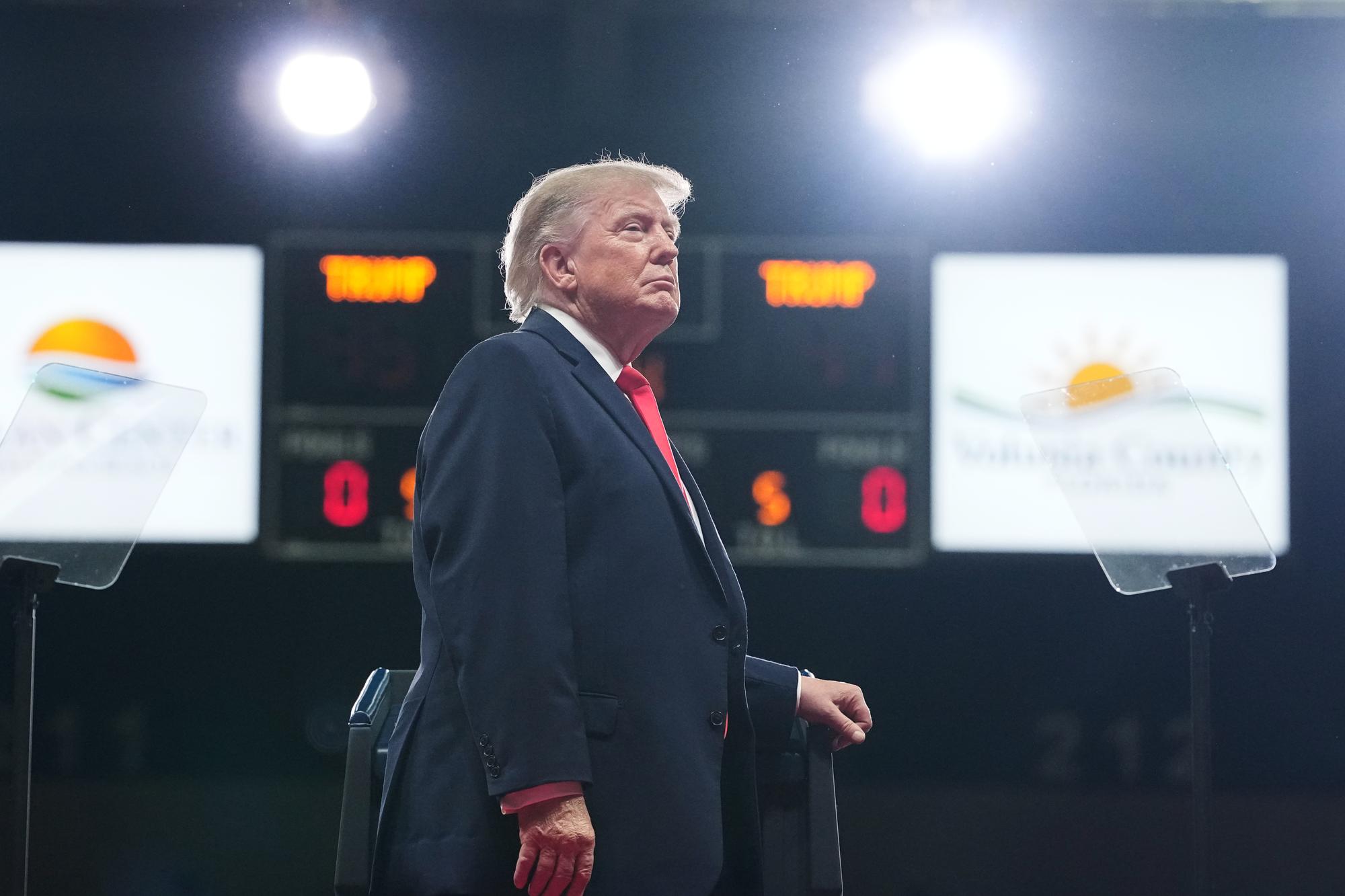
Chinese commentators reach a similar conclusion, but explain it differently. For them, the main driver of U.S. inconsistency is not just a strategic miscalculation but electoral arithmetic. Wen Jing, a researcher at Tsinghua University’s Center for International Security and Strategy, stresses in her commentary that the elections simultaneously raise the political cost to Donald Trump of launching a new military operation and push him to apply conspicuous pressure on Iran to strengthen his negotiating position. Her phrase, “the dual impact” of the midterms, captures the Chinese reading of Washington: U.S. policy can swing between threats of bombing and negotiations not because the strategic realities of the Middle East have changed, but because the president’s political needs have. (ciss.tsinghua.edu.cn)
This logic is also widespread in Chinese state analysis. Xinhua links the current relative calm around Iran to two election calendars—the American and the Israeli—describing the situation as effectively a “cold peace.” What is unusual about this view is that Beijing treats elections not as a guarantee of democratic control over war, but as a pause that could end as soon as the votes are counted. In other words, from the Chinese perspective, American voters do not necessarily constrain U.S. power abroad; they merely change its pace and form. (app.xinhuanet.com)
The Saudi response is far more immediate. For Riyadh, the key question is not whether U.S. strategy toward Iran is convincing, but what exactly Washington would do if Saudi territory, energy facilities or sea lanes came under attack. In an interview with Arab News, Abdulaziz Sager, founder and chairman of the Gulf Research Center, boils the expected assistance down to three tangible components: equipment, operational expertise and intelligence. This formulation matters because the Saudi debate has moved away from the old language of unconditional alliance. Riyadh expects not symbolic support, but satellite data, air-defense systems, joint planning and protection for critical infrastructure. (arabnews.com)
But even in Saudi circles that favor a strategic partnership, there is a clear note of caution. Neil Quilliam of Chatham House called Washington’s pledges “reassurance without removing the ambiguity,” while Sager warns that protecting the Strait of Hormuz while leaving the Red Sea vulnerable would address only part of the problem. This is crucial for Saudi Arabia: Hormuz, Bab el-Mandeb and Houthi attacks are seen as parts of a single risk landscape, while the United States, in the local view, may focus on the most conspicuous flashpoint in the crisis. (arabnews.com)
The second shared theme is the use of the midterms to explain almost every American move. In France, the elections are seen as a factor heightening tensions in both politics and markets. Le Monde notes that the cost of living and the war with Iran are fueling Americans’ discontent, while false accusations of election fraud are spreading. The French perspective highlights not simply the weakness of a particular administration, but the erosion of political predictability: a foreign war, economic anxiety and distrust in the voting process are beginning to operate as a single crisis of legitimacy. (lemonde.fr)
In Chinese debate, the same issue takes on a technological dimension. Xinhua describes the current campaign as the first truly “AI election”: generative systems are changing campaign tactics, political advertising and how voters access information, while technology companies are pouring money into lobbying over future regulations. Chinese analysis does not romanticize America’s technological leap. Its central argument is that AI can create not merely different political opinions, but different versions of what counts as evidence and reality. This is a particularly striking outside view of America: the problem, in this account, is not only social polarization, but the emergence of parallel information worlds that can be generated by machines. (xinhuanet.com)
The third theme is the American AI boom as a potential source of global financial instability. In France, it is already being discussed not in terms of technological triumph, but in terms of debt, overheating and a painful test of whether the technology can deliver real returns. In a report by Le Monde, the decline in technology stocks is linked to investors’ doubts that vast investments in data centers and AI can pay off quickly enough. The French concern is particularly clear-eyed: the question is not whether the technology is revolutionary, but whether capital will have enough revenue, inexpensive financing, electricity and market patience to pay for that revolution. (lemonde.fr)
Chinese observers see the same American story as a signal of a shift in the global technology cycle. Chinese financial analysts increasingly contrast the old logic—markets reward any massive spending on computing—with a new one in which investors demand monetization and focus on the declining returns on capital expenditure. This does not mean China believes America’s technological edge has disappeared. Rather, it shows that Beijing sees a vulnerability in the way the United States finances its technological leadership: the state-backed political race for AI, private debt, mega-platforms and the stock market are all too closely intertwined. (epaper.stcn.com)
The Saudi perspective adds an important detail: Gulf countries’ money is becoming part of the American AI equation. The French press has reported on SoftBank’s efforts to raise substantial funds from Gulf investors to continue expanding in AI. For Riyadh, then, America’s technological frenzy is not just a distant Wall Street story, but also a question of how wise it is to tie its own capital to an economy where borrowing costs are rising, military risks in the Middle East are growing and markets are becoming less tolerant of promises of future profits. (lemonde.fr)
Ultimately, France, China and Saudi Arabia agree on one thing: the United States remains an indispensable player, but is increasingly seen as something other than an automatically stable and predictable center of the system. France sees the risk of political and financial overextension; China sees Washington’s foreign policy as dependent on domestic political struggle and technological mobilization; Saudi Arabia sees the need to measure alliance pledges against concrete capabilities. The most important international conclusion from the current debates is that the world no longer judges America by its declarations of strength. It judges the country by whether it can end a war, hold elections without deepening its divisions and finance its technological race without turning it into a new source of global shock.