In Germany, China and Brazil, the United States is being discussed in mid-October 2026 not as a unified superpower with a clear strategy, but as a state whose foreign policy increasingly looks like a collection of separate deals tied to domestic American politics. The most prominent topics differ: in Germany, Washington’s sudden softening toward Russia amid the war against Ukraine; in China, whether the practical U.S. stance toward Taiwan changed after the Chinese-American summit; and in Brazil, fears that tariffs, Donald Trump’s public statements and diplomatic signals are becoming a factor in national elections. But local commentators share a similar conclusion: American power remains immense, while its predictability has declined substantially.
This concern is particularly sharp in Germany. German observers are focused on the agreement reached by Washington and Moscow that opens the way for Russian diesel deliveries to the United States, and on how the Trump administration is simultaneously increasing pressure on Kyiv. In a ZDF commentary, journalist Katrin Eigendorf formulates the main German question: whose side is the American president actually on in Russia’s war against Ukraine? This is not a rhetorical question for Berlin: if Western sanctions unity can be weakened by a bilateral commercial agreement between the United States and Russia, Europe’s strategy of supporting Ukraine becomes dependent on decisions made without Europe. (zdfheute.de)
The German reaction is not simply a familiar form of anti-Americanism. Rather, it is a painful recognition of the gap between American promises to its allies and the practice of transactional diplomacy. For Germany, Russia’s war is an existential issue of European security; for the White House, as many German authors see it, the war is increasingly becoming a bargaining chip involving energy prices, the upcoming U.S. midterm elections and Trump’s personal negotiating logic. It is telling that the German debate links America’s foreign-policy inconsistency to the need for Europe to assume more responsibility itself: even the organizers of a discussion at the Academy for International Affairs of North Rhine-Westphalia frame the issue this way—“America under pressure, Europe forced to act?”—in announcing their October meeting. (aia-nrw.org)
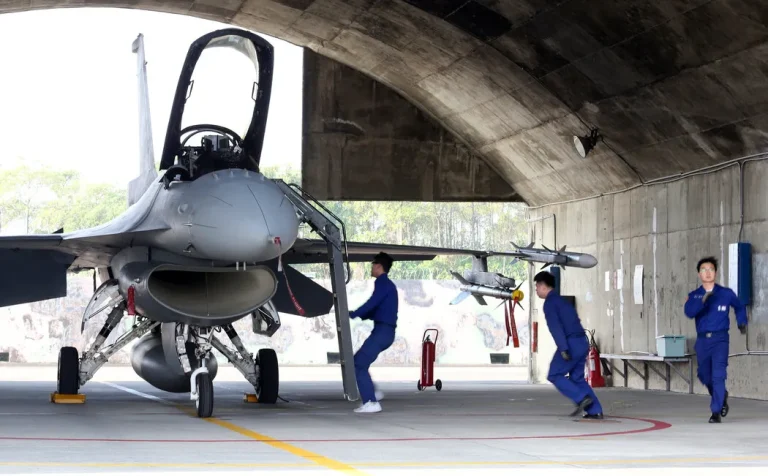
The Chinese debate is less emotional, but no less wary. After the meeting between the leaders of China and the United States, Chinese commentators are examining not declarations but bureaucratic and military indicators: whether arms deliveries to Taiwan will continue, whether approvals will be delayed, and whether the language of American statements about “One China” will change. In an analysis by the Chinese portal China-U.S. Review, author K. S. Liu reaches a cautious conclusion: basic U.S. policy has not formally changed, but the pace of arms-contract approvals has become a subject of close scrutiny. His formulation is particularly characteristic of China’s expert debate: a single pause does not yet prove a reversal, but a prolonged delay or cancellation of deliveries would constitute tangible evidence of a policy shift. (zmyx.net)
This caution is precisely what distinguishes the Chinese reaction from the German one. In Berlin, Washington’s unpredictability is seen as a risk of losing an allied pillar. In Beijing, it is viewed as an opportunity, but not as a gift. Chinese authors are in no hurry to declare closer U.S.-Chinese ties a strategic turning point: in their view, Trump may temporarily ease a specific issue in pursuit of a larger deal without abandoning the fundamental rivalry. Taiwan therefore remains, from the Chinese perspective, not merely a regional problem but a test: can the White House separate trade bargaining and personal diplomacy from its military and political commitments to the island?
A second important layer of the Chinese debate concerns the United States’ domestic economic constraints. In a commentary for China Radio International, Wang Ruibin, director of the Institute of World Economy and Development at the China Institute of International Studies, links America’s record debt and budget deficit to the political calendar: in his assessment, the administration is postponing painful fiscal adjustments until after the midterm elections. In other words, in the Chinese reading, U.S. foreign activity is increasingly explained not only by geopolitical design but also by the need to maneuver among the deficit, weakening consumption and electoral risks. The Chinese commentary speaks directly of a “dilemma” between fiscal and monetary policy. (news.cri.cn)
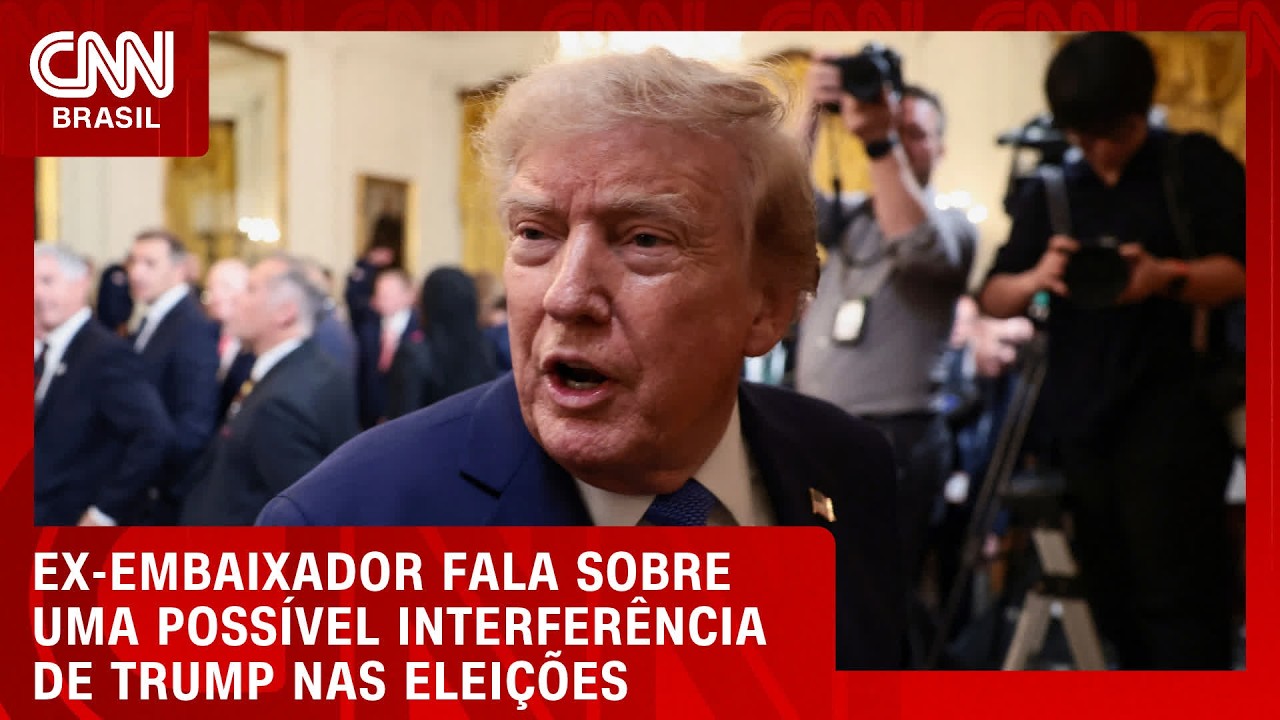
In Brazil, this American “transactionalism” is felt most directly because it has become intertwined with the campaign ahead of the presidential election. The issue here is not an abstract question of an ally’s reliability, but the limits of acceptable foreign influence. Rubens Barbosa, a former Brazilian ambassador to the United States, told CNN Brasil that indirect interference is already taking place: he is concerned not about the prospect of military action, which he rules out, but about the possibility of political pressure and economic sanctions if the election result is challenged. In an interview with CNN Brasil, he describes this as a process that is “already happening” [“this is already happening”]. (cnnbrasil.com.br)
This concern is fueled by a sequence of real events: tariffs, visa restrictions and Trump’s statements that he is following Brazil’s elections “very closely” [“de perto”]. For Brazilian audiences, the American president’s words carry more weight than ordinary diplomatic courtesy because they were preceded by economic measures and open pressure surrounding the political future of Bolsonaro family supporters. Folha de S.Paulo noted that the statement came three days before the first round, amid concerns within the Brazilian government about American interference. (www1.folha.uol.com.br)
However, the Brazilian debate is not uniform. Some see Washington’s hard line as a direct threat to sovereignty and a repetition of the old Latin American pattern in which economic pressure quickly turned into political influence. Others believe that the United States is simply using the levers available to it in a struggle for favorable trade and technological conditions. Most noteworthy is the position of Adam Goldsmith, a former U.S. Treasury financial attaché for South America: in a column for Folha, he writes that the relatively limited importance of bilateral ties both protects Brazil from American pressure and deprives it of opportunities. This is an atypical conclusion: distance from Washington is not only an expression of independence, but also a sign that the two largest countries in the Americas have failed to build relations based on trust and mutual economic benefit. (www1.folha.uol.com.br)
This is where all three national perspectives converge. Germany fears that the United States may make decisions about European security over Europe’s head; China is testing whether Taiwan will become a bargaining chip in a broader U.S.-Chinese agreement; and Brazil fears that trade tariffs and diplomatic signals will turn its domestic election into an extension of America’s partisan struggle. For Berlin, the key phrase is “European autonomy”; for Beijing, “strategic vigilance”; and for Brasília, “sovereignty.” But behind these different words lies the same observation: today’s America is perceived less as a guardian of predetermined rules than as a powerful player prepared to renegotiate the rules in every individual deal.