Venezuela’s discussion of the United States in October 2026 is unfolding across two different time zones at once. One is the still-fresh shock of the armed operation that Caracas calls nothing less than the “kidnapping” of the president: on the night of January 3, US helicopters struck targets in Caracas, Miranda, Aragua and La Guaira; Nicolás Maduro and his wife, Cilia Flores, were captured and taken to New York, while Vice President Delcy Rodríguez was recognized by Washington as head of the transitional government. The other time zone is the almost routine, deeply contradictory life under American “patronage”: talks in Caracas, the lifting of sanctions on Chavista officials, oil deals, and an increasingly heated dispute over who should build a new Venezuela and on what terms.
It is this second layer that is currently generating the most local opinions and irritation. It also exposes the central paradox of Venezuela’s view of the United States: Washington is simultaneously seen as the force that destroyed the old regime and as a force bargaining with its remnants rather than with those Venezuelans regard as the winners of the elections.
First topic: Not “liberation,” but bargaining—and the main scandal surrounding María Corina Machado
The central story of the week was the public rift between Washington and María Corina Machado—the Nobel Peace Prize laureate and opposition leader who, according to her own claims, won the 2024 presidential election. In an interview with The New York Times from Panama, she said explicitly for the first time that the United States had excluded her from negotiations in Caracas. She called the oil agreements being promoted by Washington “obscene corruption” (Spanish: “corrupción obscena”), referring to the transfer to businessman Alejandro Betancourt, owner of NABEP (North American Blue Energy Partners), of control over roughly one-fifth of the country’s oil reserves. This is reported in detail by El Pitazo and Notimérica.
The key local nuance, almost invisible in English-language accounts, is not emotional but institutional. In the analytical program “Punto y Contexto,” El Pitazo director César Batiz reconstructs the State Department’s argument: one cannot negotiate a transition while simultaneously claiming the position of head of the transitional government. “Precisely because you are seeking power, you cannot be the arbiter, negotiator and beneficiary of the agreement at the same time,” he quotes Washington’s reasoning as saying (El Pitazo). Machado responds from the standpoint of a mandate: if I represent the movement that won the 2023 primaries and, according to its account, the 2024 election, why am I absent from the table where the country’s future is being decided?
It is particularly telling that Machado cautiously, but nevertheless clearly, drew a line: a future democratic government would honor contracts “consistent with Venezuelan law,” but Betancourt would not be a “viable partner” for her. She calls him one of the main culprits behind the collapse of the national power grid (Notimérica). This is not a rejection of deals but a signal that their terms and beneficiaries will be reviewed. And that strikes directly at one of the pillars of US-Venezuelan relations.
The reaction from the Chavista camp is also revealing. Diosdado Cabello, secretary-general of the PSUV and the man known in the country as “number two,” responded not to the substance of her claims but to the issue of her return: “Why doesn’t she come back? Let her come to Venezuela—no one is stopping her,” he said, calling her statements about being barred from entering the country “pure straw” (Spanish: “pura paja”—empty talk) (Notimérica). Machado says she has made seven unsuccessful attempts to return, including two after the June earthquakes.
Second topic: Sanctions as currency—“Rodrigato” buys its way out
The second story being hotly debated in Venezuelan media is the lifting of US sanctions on Jorge Rodríguez, Delcy Rodríguez’s brother, president of the National Assembly and the regime’s chief negotiator. This occurred a day after Colombian businessman Álvaro Pulido, who is close to Alex Saab, appeared in a Miami court. He is accused of money laundering, bribing Venezuelan officials and securing multimillion-dollar contracts at the expense of state funds.
Political analyst Juan Manuel Trak directly links the two events in a comment to Efecto Cocuyo: “The extradition of Álvaro Pulido to the United States is not accidental.” In his view, this signals that Washington is “at least satisfied” with the progress of the dialogue, while Chavismo is demonstrating its negotiating ability to secure the lifting of individual sanctions, not just sectoral licenses. “It is a kind of ‘win-win’ between Miraflores and the White House,” he says, adding an important caveat: ordinary Venezuelans “have not seen many changes” since January 3.
Consultant Erik Obermaier describes the situation using the word “tutelage” (Spanish: “tutelaje”): Chavismo retains room to exercise power and control over the country, and the removal of restrictions on Rodríguez is a showcase for this tutelage. The article also notes that Switzerland lifted the freeze on the assets of Marleny Contreras, Cabello’s wife, and Jorge Arreaza (Efecto Cocuyo). Cabello, Padrino López and others remain on the OFAC list—and this too is part of the local debate: in Venezuela, sanctions are viewed not as a moral instrument but as bargaining chips in a deal in which every official is “looking for the best way to come out unharmed.”
For Venezuelan readers, the issue of impunity is especially painful. An author at Runrun.es describes it as “concessions to impunity and the fine print” accompanying authorization to do business with people of questionable reputations, and asks who will ultimately judge the White House’s sincerity—“in the end, history will do so.” The same article offers the concise image of “looking in the rearview mirror” (Spanish: “la mirada desde el retrovisor”), which Chavista rhetoric uses to warn against judging local politics by old standards: supposedly, in order to achieve a transition, it will be necessary to “swallow several toads” (Spanish: “tragarse varios sapos”—an expression meaning to tolerate something unpleasant).
Third topic: Oil, the dollar and the question “How much will be left for us?”
The most widespread, “street-level” issue is the economic price of the American presence. Sociologist and Poder y Estrategia director Ricardo Ríos presented a poll of 1,014 respondents in eight cities—Caracas, Maracaibo, Barquisimeto, Barinas, San Cristóbal, Puerto La Cruz, Barcelona and Ciudad Guayana—on the program “Vladimir a la Carta.” The main conclusion was: “People reject a large-scale oil agreement with the United States if the same government remains in place,” Diario de Los Andes quotes him as saying.
At the same time, Venezuelans see geopolitical benefits in the deal, but are worried about the “fine print”: what share of the resources will remain in the country, how reversible the deal is, and how transparent it will be. According to the poll, the greatest irritation is caused specifically by Betancourt’s role as the agreement’s principal operator. Another highly revealing detail is that 72% support dollarization, although Delcy Rodríguez rejected it, while 51% are willing to receive their salaries in bolívars only if the exchange rate remains stable. Rodríguez’s approval rating has deteriorated: whereas 50% were withholding judgment in February and March, 54% now assess her administration negatively.
Interestingly, questions about the “price” of the deal are also being raised in Washington. State Department spokesperson Tommy Pigott told NewsNation that the talks had “100 percent” support and that there had been “real results” under Secretary of State Marco Rubio’s three-phase plan—“stabilization, economic recovery and political reconciliation, democratic transition”—including reforms to ensure an independent Supreme Court and the repeal of “repressive laws that were used against political speech” (El Cooperante). Rubio, after receiving Dinorah Figuera, the 2015 National Assembly speaker, called what was happening “the best opportunity in more than a generation to restore democracy” and stressed that the goal was not simply elections but a “lasting democracy” supported by institutions capable of preserving it.
Fourth topic: Maduro’s trial and “piracy”—two narratives about legality
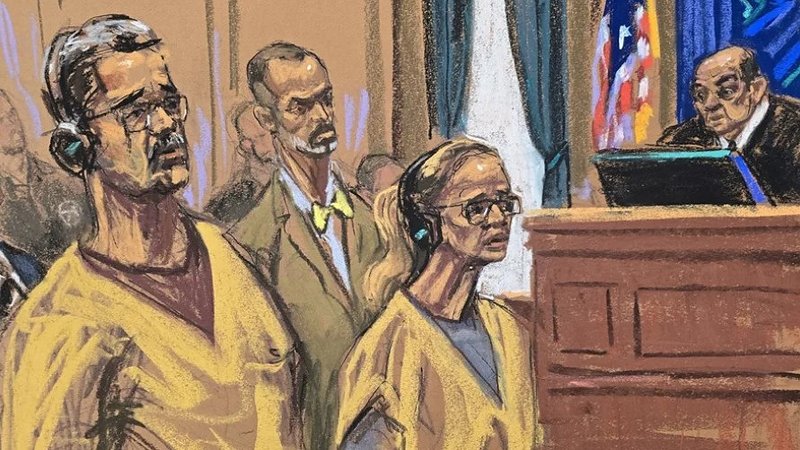
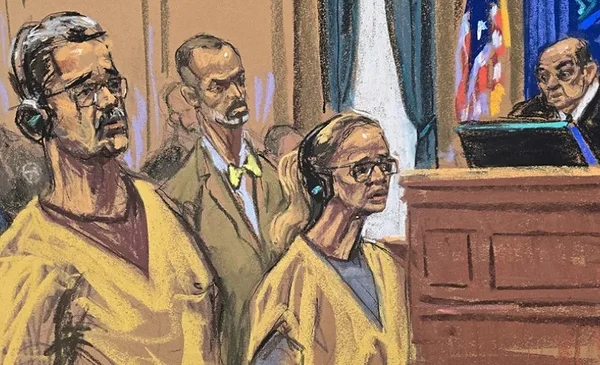
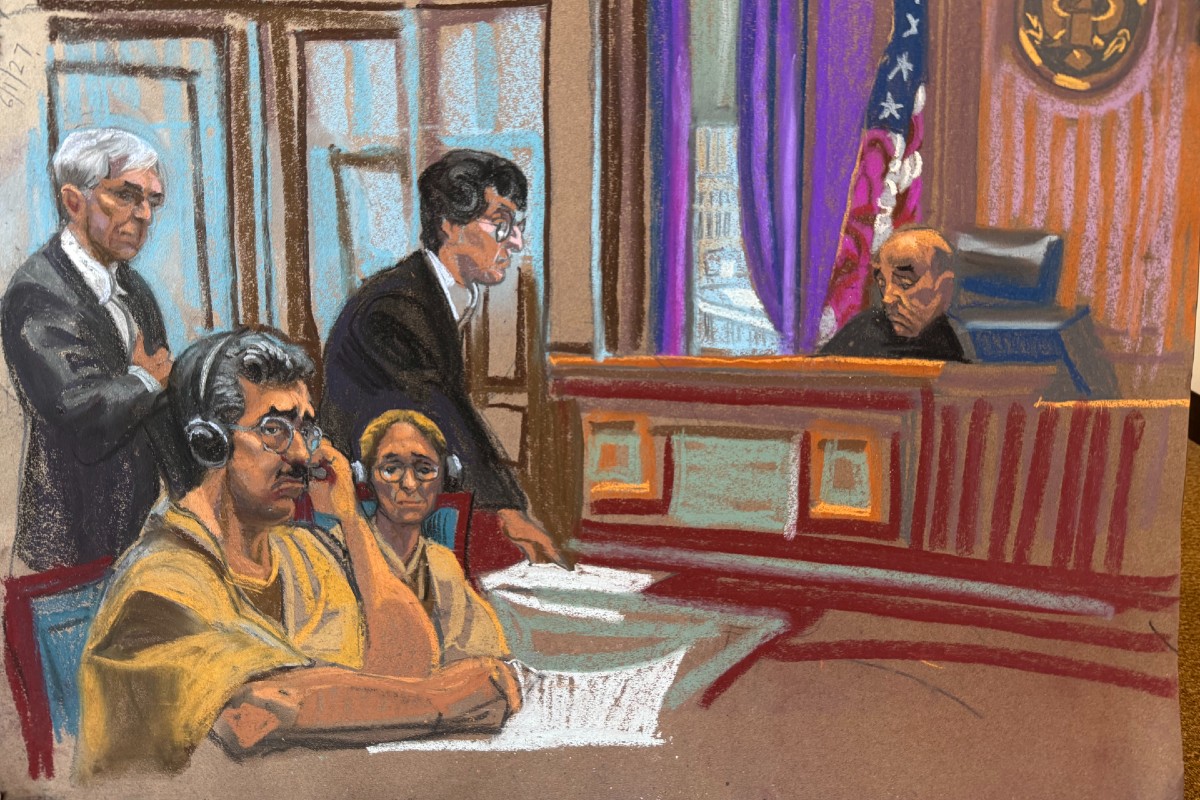
Meanwhile, the legal drama surrounding Maduro continues. On October 15, he and Cilia Flores pleaded not guilty in the US District Court for the Southern District of New York to new charges of conspiracy to use torture and expanded narcoterrorism charges. Maduro called the charges “false accusations and testimony against his person,” while Flores said she was “completely innocent.” Judge Alvin Hellerstein postponed the start of the trial from June 1 to June 14, 2027 (Red Uno). The Venezuelan outlet El Nacional reveals the diplomatic background: US prosecutors say Caracas never requested immunity for Maduro, but on May 14 it sent a note asking that Delcy Rodríguez be granted immunity as head of state—a request that was approved on July 20. In other words, Venezuela’s current authorities legally “handed over” Maduro themselves.
In the local and allied press, this story is presented within a completely different framework. Maduro’s son, lawmaker Nicolás Maduro Guerra, called the proceedings “illegal” and “proti