Venezuela is experiencing the most contentious moment in its recent political history. After U.S. troops took Nicolás Maduro to New York in January, the country came under Washington’s close supervision. Over the past two days, this has sparked several heated debates, ranging from amnesty for political prisoners to the possibility of a permanent U.S. military presence. Caracas and Washington are signaling closer ties while carefully avoiding public details, even as debate grows within Venezuelan society over where “transition” ends and loss of sovereignty begins.
Rubio and Blanco Meet: Political Prisoners and the “Phases” of Transition
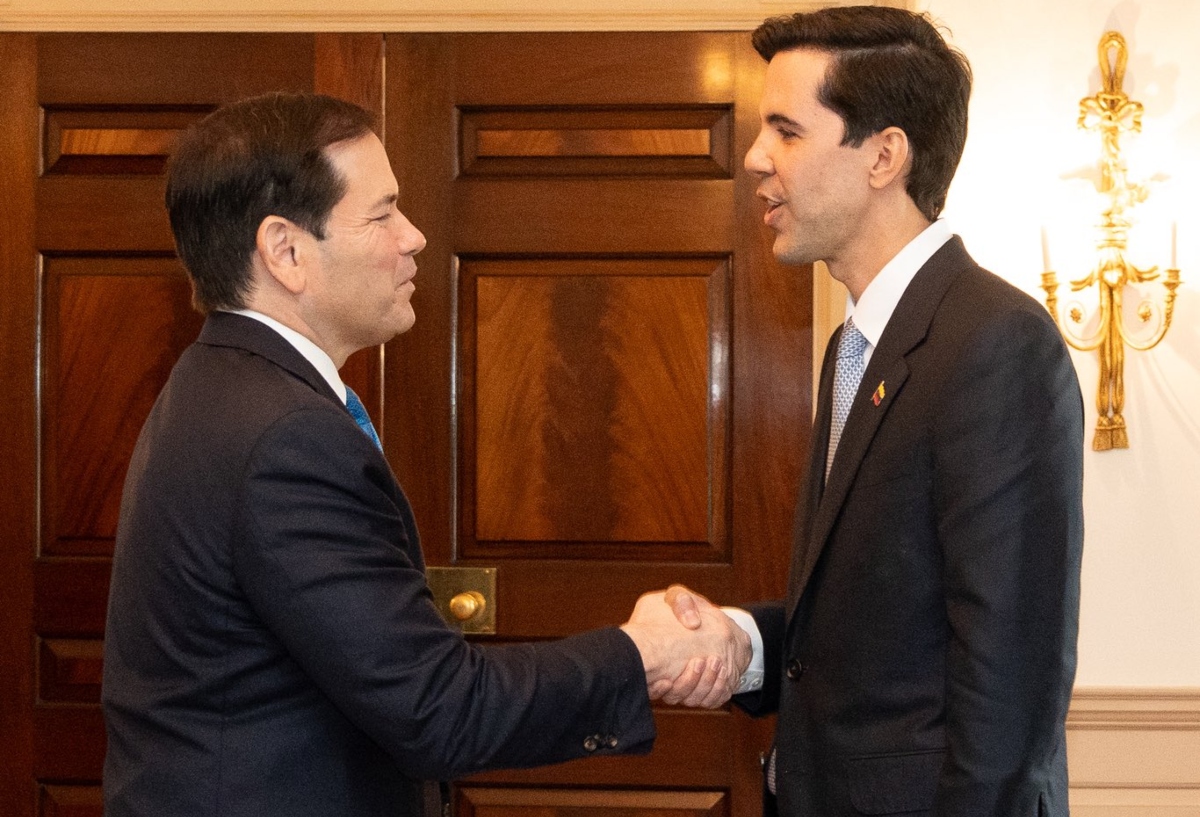
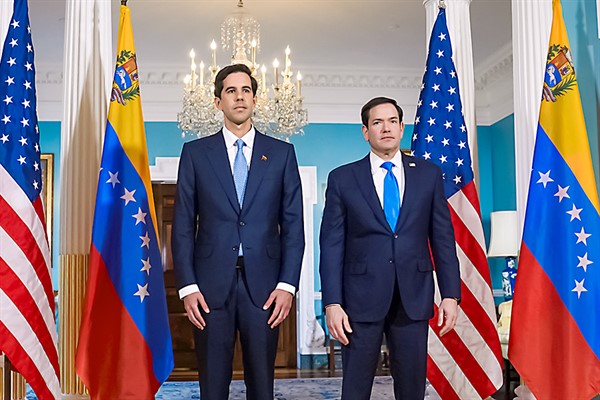
The main official event was the first visit to Washington by Venezuela’s new foreign minister, Oliver Blanco, appointed a week ago by acting president Delcy Rodríguez. U.S. Secretary of State Marco Rubio “called for the continued release of political prisoners” and reaffirmed Donald Trump’s “three-phase plan”—stabilization, economic recovery, political reconciliation and a democratic transition, according to a State Department statement cited by El Nacional. The meeting itself was conspicuously restrained: the diplomats posed for the press without the customary handshake and did not answer questions, Clarín reports.
After the meeting, Blanco chose the language of agreement rather than bargaining. He said the two countries now had “a lot in common” and shared the goals of “economic recovery, democratic transformation and coexistence for all,” El Peruano reports. The wording is telling: Venezuela speaks publicly of “common ground,” while Washington speaks of demands. A subtle distinction that points to a gap in their negotiating positions.
The amnesty in question was adopted under U.S. pressure and has already led to the release of hundreds of people. But as of mid-September, 344 political prisoners remained behind bars, according to the nongovernmental organization Foro Penal; that figure was reported by AFP via BSS. No election dates have been announced: both the government and the opposition say elections will take place, but neither has given a date. According to diplomatic sources, the Supreme Court and National Electoral Council will first be reconstituted by the end of the year, with elections to follow.
Military Pact: “Colonialism” or Cooperation
The most explosive issue of the past two days is a New York Times report that Washington is negotiating a status of forces agreement (SOFA)—a legal document setting out the rules for foreign troops stationed in a country—with Caracas. According to TalCual, the State Department, under Rubio’s leadership, is conducting the talks, while the size and deployment of the troops would be determined by separate agreements. In its comment, the State Department insists that such pacts “provide clear and predictable legal frameworks” for exercises, ship visits and humanitarian assistance.
This is where the domestic debate becomes truly heated. Citing experts it interviewed, TalCual writes that Chavismo—the traditionally anti-American ideology named after Hugo Chávez—still has the support of 10–20% of the population, including members of the military and security services who could become staunch opponents of the pact. Some citizens also see what is happening as “a new form of Western colonialism,” a perception reinforced by Trump’s comments about oil. Also telling is the assessment of a former U.S. official who worked on military cooperation in Latin America: he points to Venezuela’s weak infrastructure and notes that the two countries’ militaries have not worked together for nearly a decade.
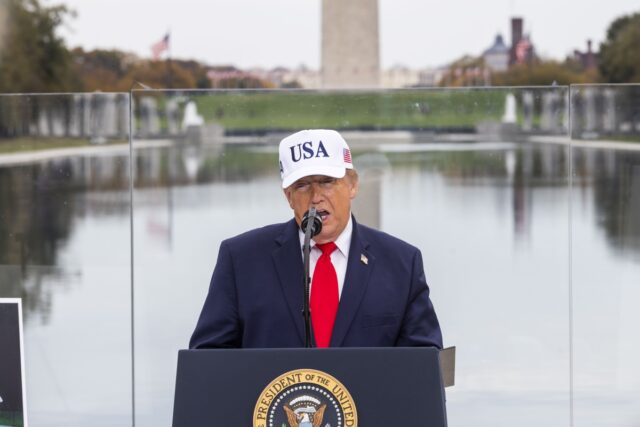
Trump’s own rhetoric gives these concerns particular weight. On Monday in Washington, he spoke of “our conquest of Venezuela” (The Atlantic). Critics see this as confirmation of their worst fears; supporters of closer ties dismiss it as a poor choice of metaphor. Caracas has yet to issue an official response to the SOFA proposal: neither the Foreign Ministry nor the embassy in Washington has replied to journalists’ requests, Sumarium reports.
Strike on the ELN in Apure: Joint Operation and Questions About Casualties
A third issue stirring Venezuelan public opinion is a deadly strike on a camp belonging to the Colombian rebel group ELN (National Liberation Army) in Apure state, near the Colombian border. According to four U.S. officials, the operation was carried out with U.S. intelligence and drone support, Infobae reports, citing The New York Times. The United States’ involvement has not been officially acknowledged; a senior Venezuelan military official, speaking anonymously, confirmed only that the country’s armed forces carried out the strike.
Local human rights advocates were the first to raise the alarm. The Venezuelan organization Fundaredes reported that at least 23 people had been killed and that many bodies were “mutilated” by the blasts. Juan Francisco García, its coordinator in Apure, said the dead included pilots, suppliers, and relatives and partners of ELN members—in other words, not all the victims were combatants. This detail turns a story about fighting drug trafficking into a debate over the human cost of the U.S. “militarized” strategy in the region, which legal experts increasingly describe as problematic.
Machado’s Return and the Paradox of Transition
A fourth story is the return to Venezuela of Nobel Peace Prize laureate María Corina Machado after almost a year in exile. Her arrival in late October immediately reshuffled the political landscape. A The Conversation analysis highlights a key paradox: Washington wants stability, oil and results before Trump’s term ends, while its “road map” assumes that Rodríguez will declare the presidency vacant in 2027, opening a six-month window for elections. But without Machado taking part in the process, any outcome will lack legitimacy—and her popularity also makes an election dangerous for the ruling elite.
According to The Atlantic, Machado is already calling for the “dismantling of the repressive state” and justice for those responsible for persecution—effectively demanding the prosecution of some of Washington’s current allies. She has also promised that “any contract signed legally will be honored,” a direct signal to investors and oil partners. In other words, one U.S. ally in Caracas is calling for another to be held accountable, and Washington will have to manage that rivalry.
The Oil Debate and the “Nation-State”
Finally, the Venezuelan press is actively discussing the ideological underpinnings of the oil agreement. In a column for El Cooperante, the author examines Rubio’s remarks about “national power” and restoring the nation-state, and reaches an unexpected conclusion: the U.S. secretary of state is criticizing neoliberalism and the erosion of sovereignty, while Venezuela has entered the U.S. geopolitical equation as a source of “secure energy” amid the conflict with Iran. This is a rare example of a Venezuelan commentator seeing Washington’s policy not simply as self-interest, but as a coherent—conservative—doctrine in which Caracas is assigned the role of a resource base, not a partner.
The overall picture after two days is this: official Caracas speaks of “common ground” and cooperation; human rights advocates and part of the public speak of colonialism, casualties and impunity; and the opposition insists on elections, without which any deals will remain fragile. Where these positions converge is in recognizing that the fate of the transition will be decided neither in Caracas nor in Washington alone, but through their difficult and unequal negotiations.