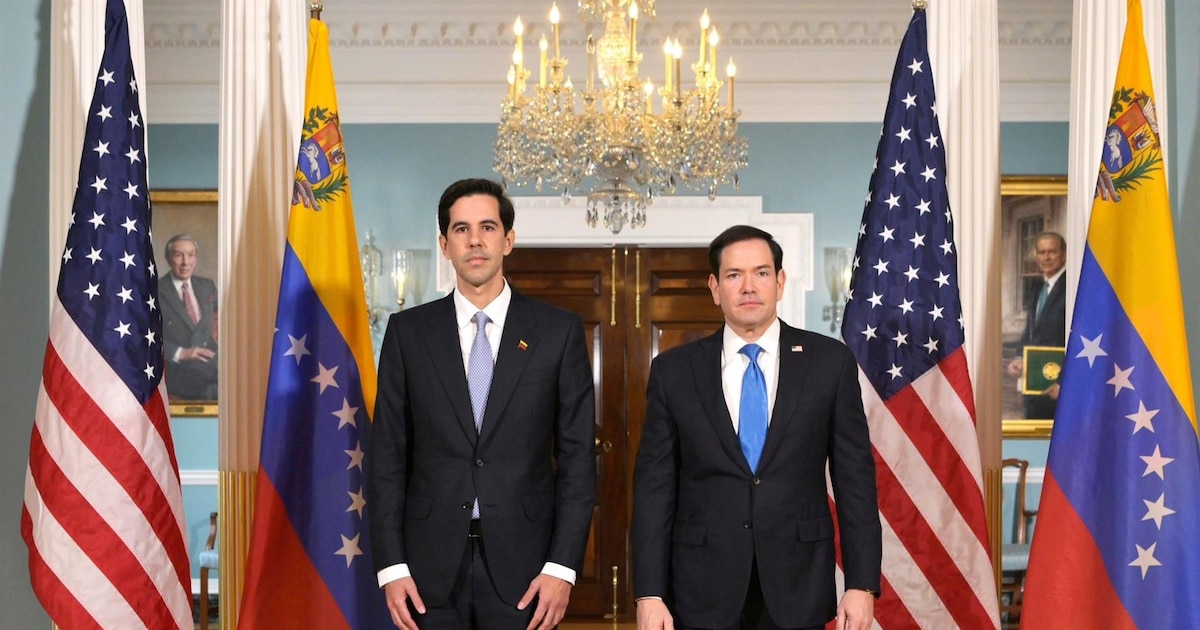
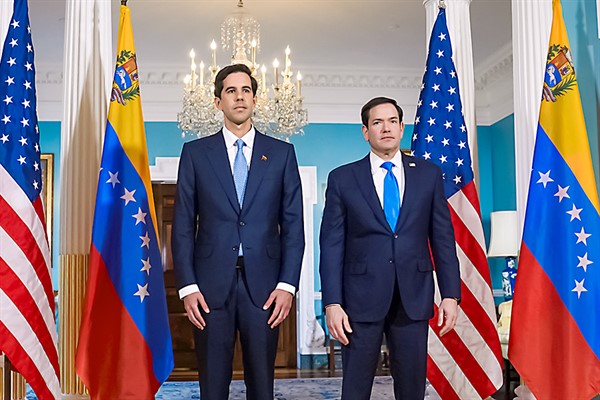
The main event of the past two days was the first meeting in many years between the foreign ministers of Venezuela and the United States. Oliver Blanco, the new foreign minister, appointed just days earlier, was received in Washington by Secretary of State Marco Rubio and then by Treasury Secretary Scott Bessent. Caracas has presented the meeting as a breakthrough toward “common ground” and economic recovery, while opposition and independent Venezuelan commentators read the same reports as a list of conditions set by Washington.
Dispute Over the Timing and Meaning of Elections
At the heart of the debate is the phrase “free, fair and credible elections” (elecciones libres, justas y creíbles), repeated by Rubio both in an official statement and publicly on social media. The Venezuelan opposition outlet LaPatilla addresses the message directly to interim President Delcy Rodríguez: if she “still had any doubts,” Rubio “wrote it to her minister.” According to the outlet, Washington is willing to discuss reconciliation and reforms, but the process must ultimately lead to elections with democratic guarantees, not merely a reshuffling of institutions.
In an interview with NTN24, quoted by Infobae, Blanco spoke of “many points of agreement” and a shared “direction of travel”: economic recovery, democratic transformation and coexistence. Significantly, neither the government nor the opposition has named an election date. The AFP report published by El Peruano relays the American diplomats’ proposed timeline: first, renew the Supreme Court and electoral authority by the end of the year; then hold a vote, with Rodríguez expected to declare the presidency vacant in 2027.
Demand to Release Political Prisoners
A second point of contention is Rubio’s call to continue releasing political prisoners, made in a State Department statement and picked up by Latin American media, including Caracol Radio. The context matters: Rodríguez granted an amnesty under pressure from Washington, and, according to Foro Penal, a nonprofit organization that defends political prisoners, 344 people remained in detention on those charges as of September 18, BSS notes. Venezuelan voices diverge on the issue: official Caracas presents the amnesty as an exercise of sovereign policy, while human rights advocates and some opposition figures see it as fulfilling an external condition—one that has so far been met only halfway.
Finance, Metals and Oil as Bargaining Chips
The economic track was discussed separately with Bessent. According to Infobae, the talks covered Venezuela’s reintegration into the international financial system, access to multilateral financial institutions and the revival of the energy sector. Blanco confirmed this on social media. China’s Xinhua, however, points to an important detail omitted from Washington’s statements: sanctions remain formally in place and have only been partially eased, while Executive Order 14373 directs Venezuela’s revenue from hydrocarbons and minerals into accounts controlled by the U.S. Treasury.
Meanwhile, according to Bloomberg, as reported by LaPatilla, a second shipment of aluminum from state-owned Venalum to the United States is in the works. Trader Mercuria and investment fund Heeney Capital are negotiating the deal; the first shipment, of 15,000 metric tons, arrived in New Orleans in late September—the first such shipment since 2018. One noteworthy local detail: LaPatilla also reports that, under new License 5AA, OFAC postponed until December 18 transactions involving Pdvsa bonds secured by Citgo shares. In other words, financial normalization is proceeding in small, reversible steps.
Maduro’s Trial and the Question of a Military Presence
Another strand of the Venezuelan response concerns the legal fate of Nicolás Maduro and Cilia Flores in New York. Venezuelan lawyer Kelvi Zambrano told El Nacional that under the U.S. Federal Torture Act, passed after the 1994 ratification of the UN Convention, defendants could face sentences ranging from 20 years to life imprisonment, and theoretically even the death penalty. He describes cases of torture documented by a human rights coalition and 27 deaths in custody. In his view, the defense is dragging out the proceedings in hopes of reaching a deal or securing house arrest.
A development causing concern among some Venezuelans is a report by The New York Times, summarized by Infobae, about the U.S. effort to establish a long-term military presence. This is fueling fears that a “sovereign transition” is taking place under foreign patronage. Belarus adds another dimension to the international backdrop: Alexander Lukashenko called Maduro’s capture a “shameful act” and the “kidnapping of a president,” Prensa Latina reports.
The debate within Venezuela remains unresolved: the government sees the Washington meeting as the beginning of an economic recovery, while critics point out that the key issues—“elections,” “political prisoners” and control over revenue—are still being decided outside Caracas.