
Today’s review examines a small number of revealing reactions to events in the United States and their consequences beyond the country’s borders: from domestic political disputes surrounding Donald Trump and American farmers’ concerns over his administration’s policies to uncertainty on Wall Street linked to investment in artificial intelligence. Particular attention is paid to the strategic influence of the United States through Starlink and its role in the conflict in Ukraine. The material is based on publications by Eleconomista.es (Venezuela), Resumen Latinoamericano (Venezuela), and Killbait (Venezuela).
From the Fed to US Elections: A Venezuelan View of External Pressure
Decisions by the US Federal Reserve, European stock-market trends, Washington’s sanctions policy, the cultural struggle in Latin America, and the American election campaign have drawn the attention of Venezuelan media and outlets close to the Bolivarian political milieu. These topics share a common theme: Venezuela’s and the region’s domestic economic and political processes are closely tied to US decisions, global markets, oil prices, access to the dollar, and information conflicts.
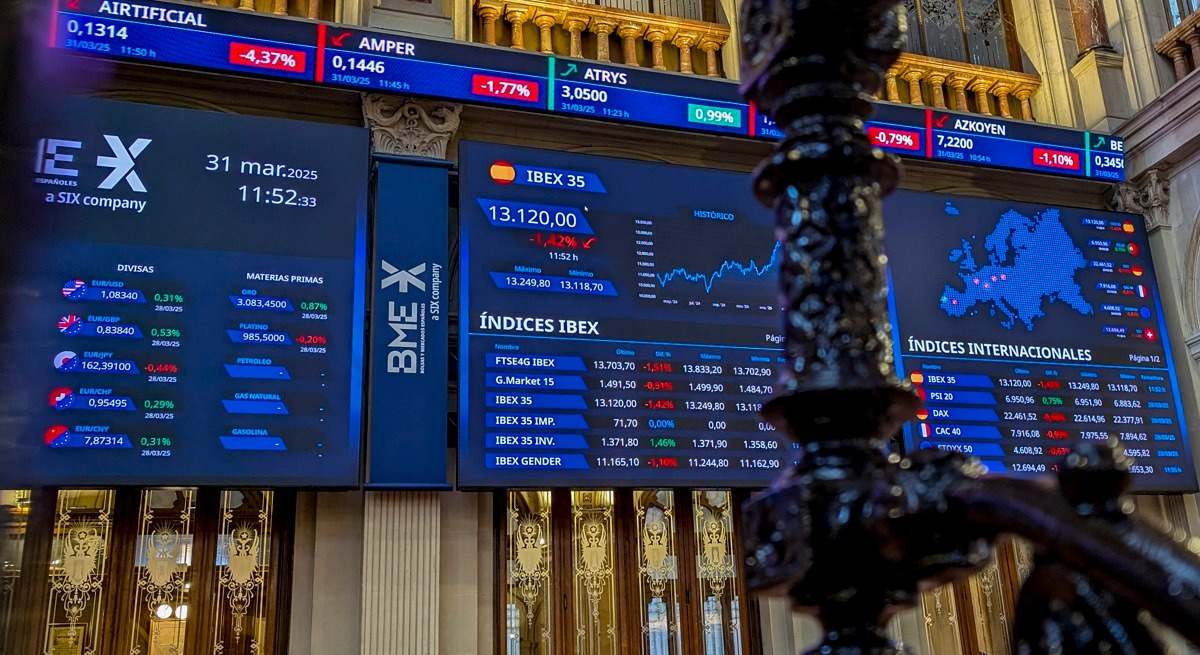
A report by elEconomista published primarily concerns European financial markets rather than events in Venezuela. Nevertheless, its conclusions have indirect significance for a country where dollar transactions have become part of everyday economic reality and oil exports remain a key source of foreign-currency revenues.
European indices showed moderate growth that day: the EuroStoxx 50 approached 6,200 points, while Spain’s Ibex 35 neared 19,200. Analysts at Link Securities attributed the optimism to an attempt by the technology sector to recover after its recent decline and to expectations surrounding the opening of trading on Wall Street. The market’s main focus, however, was on statements by Fed Chair Kevin Warsh, who did not signal in advance that US interest rates would be raised in October.
Investors interpreted his remarks as a less hawkish signal. According to estimates cited in the article, the probability of a rate hike on October 28 fell from approximately 27% to below 15%. Economist Derek Tang described the Fed chair’s remarks as follows: “It was clear that he wasn’t going to say anything the market could interpret as hawkish.”
For Venezuela, this shift in expectations matters not directly but through the global financial context. A softer US monetary policy could reduce pressure on global liquidity and dollar-denominated assets. This may affect exchange rates, import prices, the availability of foreign currency, and the cost of international transactions. Changes in investors’ risk appetite, as well as movements in the dollar, usually affect commodity markets too—above all oil, which is critically important to Venezuela’s export revenues.
At the same time, assessments of the sustainability of European growth remain cautious. Ecotrader analyst Joan Cabrero believes that the EuroStoxx 50’s rebound is not yet convincing enough. In his words, the 200-day moving average “does not possess magical properties.” In his view, more attractive levels for medium- and long-term purchases of European equities could be near 6,000, and especially 5,800 points. This comment underscores that markets respond not only to facts but also to interpretations: Fed statements may trigger short-term optimism without guaranteeing a sustained recovery.
Another regional interpretation of American influence appears in an interview published by the Venezuelan left-wing outlet Resumen Latinoamericano with Cuban politician and intellectual Abel Prieto, conducted by the Argentine agency NODAL. The chairman of the Casa de las Américas and former culture minister describes relations with the United States as a confrontation with a “very powerful, but not all-powerful” adversary.
Prieto considers US policy toward Cuba to be more than a blockade, calling it a “project of large-scale strangulation.” In his view, restrictions on fuel, food, and medical supplies, along with pressure on tourism, maritime transport, and international cooperation, are intended not only to weaken the Cuban economy but also to provoke a social explosion that could then be used as grounds for “humanitarian intervention.”
This logic resonates with Venezuela’s political milieu, where US sanctions, restrictions on the oil sector, and the risks of external pressure are regularly viewed as elements of a single strategy against the region’s left-wing governments. In this narrative, Cuba and Venezuela appear as parts of a common anti-imperialist front in Latin America, opposing sanctions, neocolonialism, a right-wing resurgence, and US informational influence.
The interview devotes particular attention to defense and public mobilization. Prieto recalls Cuba’s “National Defense Days” and Fidel Castro’s doctrine of the “War of the Entire People.” For Venezuela, this theme echoes ideas of a civil-military alliance, territorial defense, and the need to involve society in protecting national sovereignty.
Prieto also identifies culture and communications as important arenas of conflict. He accuses the United States and “hegemonic” media of portraying Cuba as a “failed state,” concealing the consequences of sanctions, and romanticizing pre-revolutionary Havana under Fulgencio Batista. In contrast, he recalls the racism, poverty, repression, and mafia economy of the 1950s. Similar disputes over historical memory also resonate in Venezuela, where political polarization is often linked to assessments of the period before Hugo Chávez, the role of the oil elite, and the consequences of the Bolivarian Revolution.
Prieto also regards social networks as tools of emotional manipulation. In his view, hatred toward “the communist, the migrant, the feminist, the gay person, the Arab, the Black person, the Muslim” is used to spread neo-fascist sentiments. He urges people not to respond to disinformation with more disinformation: “We must defend Cuba with the truth, with data, with arguments.” In the Venezuelan context, this echoes recurring accusations of an information war against Caracas and highlights the role of alternative media, political education, and public communication.
The interview also contains a warning for the region’s left-wing forces. Prieto links the collapse of the Soviet Union to a defeat in the “culture war” and speaks of the success of right-wing forces in attracting “poor right-wingers”—people disillusioned with traditional politics and receptive to authoritarian or reactionary rhetoric. For Venezuela, this argument is relevant amid social difficulties, corruption, public fatigue, a generational divide, and the risk that discontent will be redirected toward an anti-government agenda.
Young people become the key audience in this concept. Prieto supports the emergence of young bloggers, YouTubers, and other creators capable of speaking in a modern language while preserving “Martíist, Fidelist, Bolivarian, and Guevarist” principles. In this way, Cuba, Venezuela, Bolívar, Chávez, José Martí, Fidel Castro, and Che Guevara are placed within a single symbolic space of the Latin American left.
A very different, but also critical, view of the United States is offered by the Venezuelan outlet KillBait, which reports on the contest for a Senate seat from Michigan. The publication focuses on Democratic candidate Abdul El-Sayed and the use of his name, Muslim background, and middle name, Mohamed, in the political campaign.
El-Sayed frames the social dimension of his campaign as follows: “My name is not the reason you can’t afford gasoline, groceries, a mortgage, rent, or a doctor’s visit. The reason is his policies.” The “his policies” in this statement refer to Donald Trump’s agenda. The article endorses this contrast, presenting attacks on the candidate’s identity as an attempt to distract voters from inflation, high gasoline prices, housing costs, and access to medical care.
According to the article, Trump emphasizes El-Sayed’s middle name and attempts to associate the candidate with Islamism and the Muslim Brotherhood. At the same time, the publication points to the contradiction between such attacks on a Muslim politician in Michigan and Trump’s favorable attitude toward Saudi Crown Prince Mohammed bin Salman.
For a Venezuelan audience, the connection between war, oil, and the cost of living is especially clear. The outlet links American rhetoric about the Middle East to conflicts and rising gasoline prices. In a country with the world’s largest proven oil reserves that has experienced fuel shortages, economic instability, and sanctions pressure, the question of fuel affordability is not an abstract American issue but a socially significant one.
The Michigan campaign is also important nationally because it could affect control of the US Senate. El-Sayed’s opponent is presented as Trump-backed Republican Mike Rogers. The publication says the candidate’s personal identity is deliberately pushed to the forefront in place of policy proposals. The author also mentions Rogers’s accusations against El-Sayed and a dispute over who is actually connected to Michigan, noting that, according to the article, Rogers lives in Florida.
Additional episodes—AI-generated videos of Trump, disputes over rally attendance, and the brief tenure of the White House press secretary—are used to create an image of an administration focused on self-promotion and political spectacle. This is not a neutral election report: KillBait explicitly interprets the attacks on El-Sayed as dehumanization and electoral manipulation.
Across all three stories, the United States appears simultaneously as a source of global financial signals, sanctions pressure, cultural and informational influence, and domestic political conflict. For Venezuela and the regional left close to it, this picture serves as a reminder of external dependence: decisions in Washington can affect the dollar, oil, and access to capital, while US political rhetoric can shape perceptions of sanctions, sovereignty, migration, war, and social justice far beyond America’s borders.
![Emilia Trabucco* Resumen Latinoamericano, October 17, 2026. A writer, essayist, and one of the leading figures in Cuban cultural policy in recent decades, Abel Prieto Jiménez headed the Union of Writers and Artists of Cuba (UNEAC) for many years, served as culture minister from 1997 to 2012 and from 2016 to 2018, […]](https://www.resumenlatinoamericano.org/wp-content/uploads/2026/10/image-283.png)

