
The diplomatic channel between Washington and Tehran remains open despite rising tensions. On Sunday, technical consultations mediated by Pakistan and Qatar were scheduled to take place in Burgenstock, Switzerland. The Iranian delegation has already flown to Switzerland, while from the U.S. side special envoy Steve Witkoff and Jared Kushner arrived in the region. However, due to escalation in Lebanon, the precise start date of the meetings remains in doubt.
The Iranian delegation has been given the symbolic name “Minab 168” in memory of the tragedy at a girls’ school in Minab. Its key figures include: the speaker of parliament Mohammad Baqer Ghalibaf, Foreign Minister Abbas Araqchi, Ali Bagheri, assistant secretary to the Supreme National Security Council, and the head of the Central Bank Abdolnaser Hemmati. The American side has also sent high-level representatives, but the participation of Vice President JD Vance—initially expected—has not been confirmed.
Alongside these diplomatic moves, Tehran took a sharp step. The command of Khatam al-Anbia announced the closure of the Strait of Hormuz to shipping, calling it “the first stage of a response” to the United States’ alleged breach of its obligations under the war-ending memorandum and ongoing Israeli attacks in the south of Lebanon. In its statement, it stressed that further measures have been prepared in the event “aggression” continues. The decision highlights a direct link between the nuclear file and the situation in Lebanon.
Talks in Burgenstock did not take place on Friday as planned due to Iran’s position. Tehran links its participation to a de facto ceasefire in Lebanon. According to Western media, the Iranian side is demanding that the United States provide guarantees to halt Israeli attacks before consultations begin. In Tehran, it has been made clear that without fulfillment of this condition, the delegation will not sit down at the negotiating table.
Switzerland continues to prepare the venue for the meeting, emphasizing strict confidentiality. Officials said they would not disclose the details of the talks or the composition of participants “for the sake of secrecy.” Meanwhile, Qatar is acting as one of the key mediators: Prime Minister Sheikh Mohammed bin Abdulrahman Al Thani has arrived in Switzerland. Pakistan is also actively involved in the settlement efforts.
Within the Islamic Republic itself, internal consultations continue. Foreign Minister Araqchi met with his Pakistani counterpart Mohsin Naqvi, who is in Tehran on a visit. Islamabad is maintaining contact with both the Iranian and American sides in order to remove obstacles. According to U.S. intelligence, Israeli strikes on Lebanon could jeopardize a potential agreement between Washington and Tehran.
At the political level, President Trump said he has “good” relations with Israel’s Prime Minister Netanyahu, but at the same time criticized him, saying that “without my intervention, Israel would have been crushed.” Iranian officials emphasize that the Lebanon file is central: any violation of the memorandum would affect the course of negotiations. Araqchi placed responsibility on the United States for ending the war across all fronts, including Lebanon, making it clear that the upcoming meeting will be a test of the parties’ seriousness.
Comments on the news
- What happened at the “Minab 168” school and why has this tragedy become a symbol of the delegation to the talks? – In 1988, the U.S. cruiser Vincennes shot down an Iranian passenger plane over the Persian Gulf, killing 290 people, many of them students. In the talks, this tragedy reminds Iran of the price of conflicts and the need for security guarantees, and also serves as an emotional symbol of losses that Iran associates with aggression from abroad.
- What is the command of Khatam al-Anbia and what role does it play in Iran’s military and economic structure? – It is the largest economic and engineering organization under the control of the Islamic Revolutionary Guard Corps (IRGC). It manages strategic projects (oil, gas, transport, construction), and on the military side it provides logistics, defense infrastructure, and technologies. In effect, it is a “shadow” economic giant connecting the IRGC with the civilian sector.
- Why does Iran link nuclear negotiations to a ceasefire in Lebanon? – Iran views regional conflicts as a single security system. Linking them to Lebanon (through support for Hezbollah) gives Tehran leverage: if the West wants progress on the nuclear deal, Iran demands a halt to Israeli operations in Lebanon. This is a “package” tactic—nuclear issues and regional security are inseparable.
- Who is Mohammad Baqer Ghalibaf and why is his presence in the delegation significant? – He is the speaker of the Iranian parliament (since 2020), a former mayor of Tehran, and a commander in the IRGC. His presence underscores that the talks are supported by three branches of power (executive, legislative, and military) and that the conservative bloc endorses Iran’s negotiating position. This reduces the risk of internal sabotage of the deal.
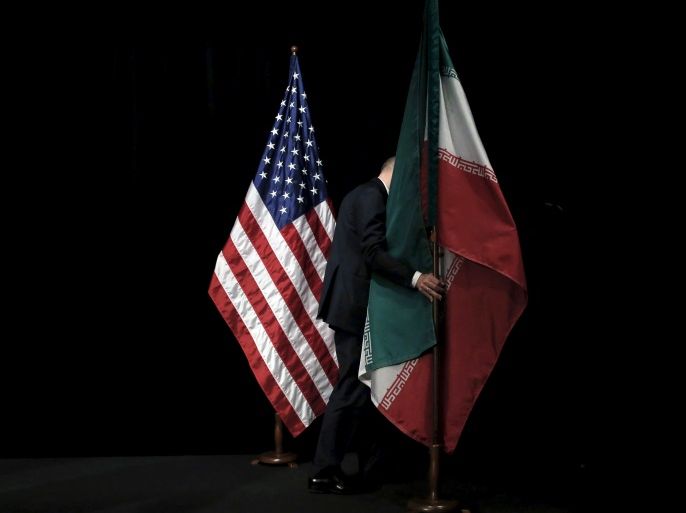

Full version: Closed Strait and trips to Switzerland.. a tense scene before U.S.-Iran talks