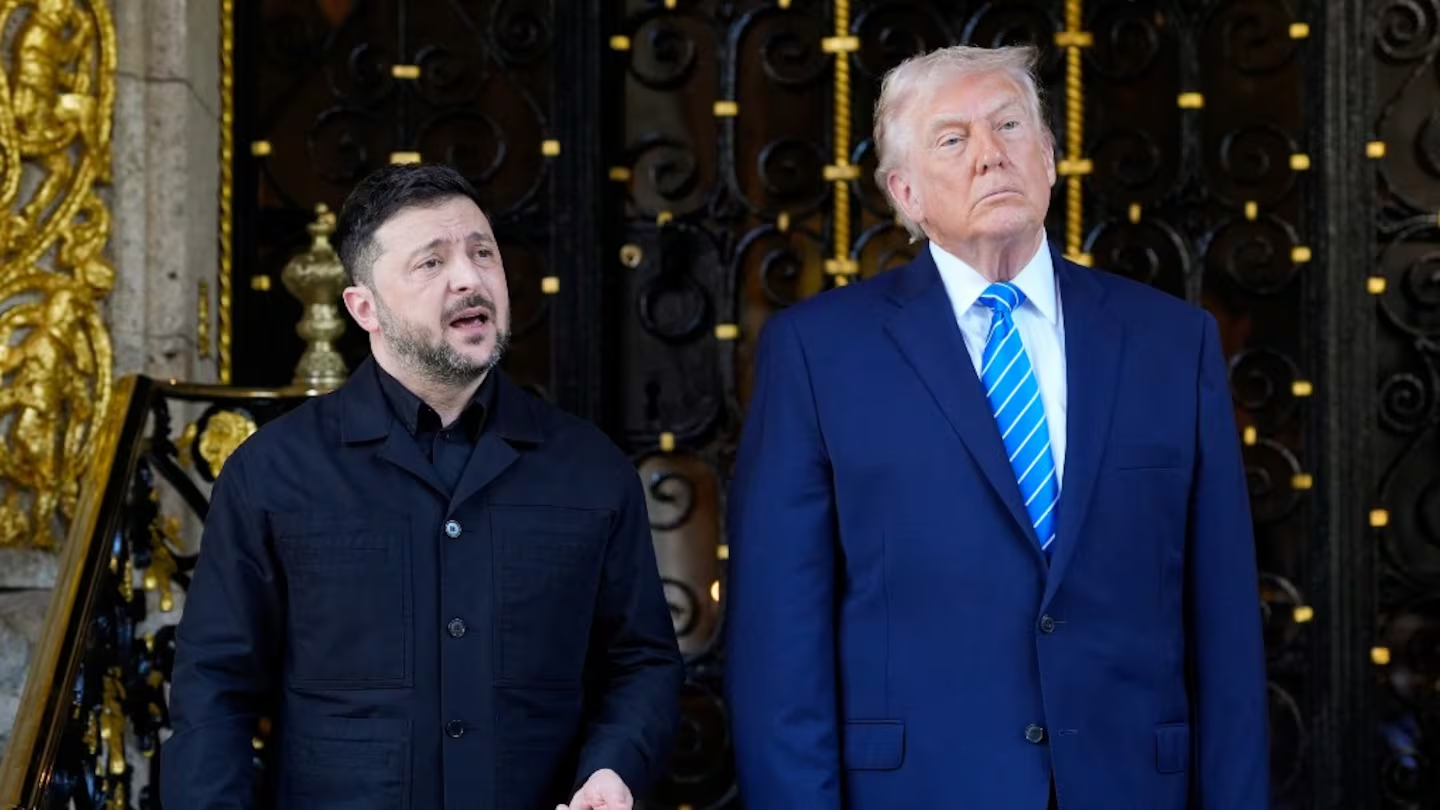
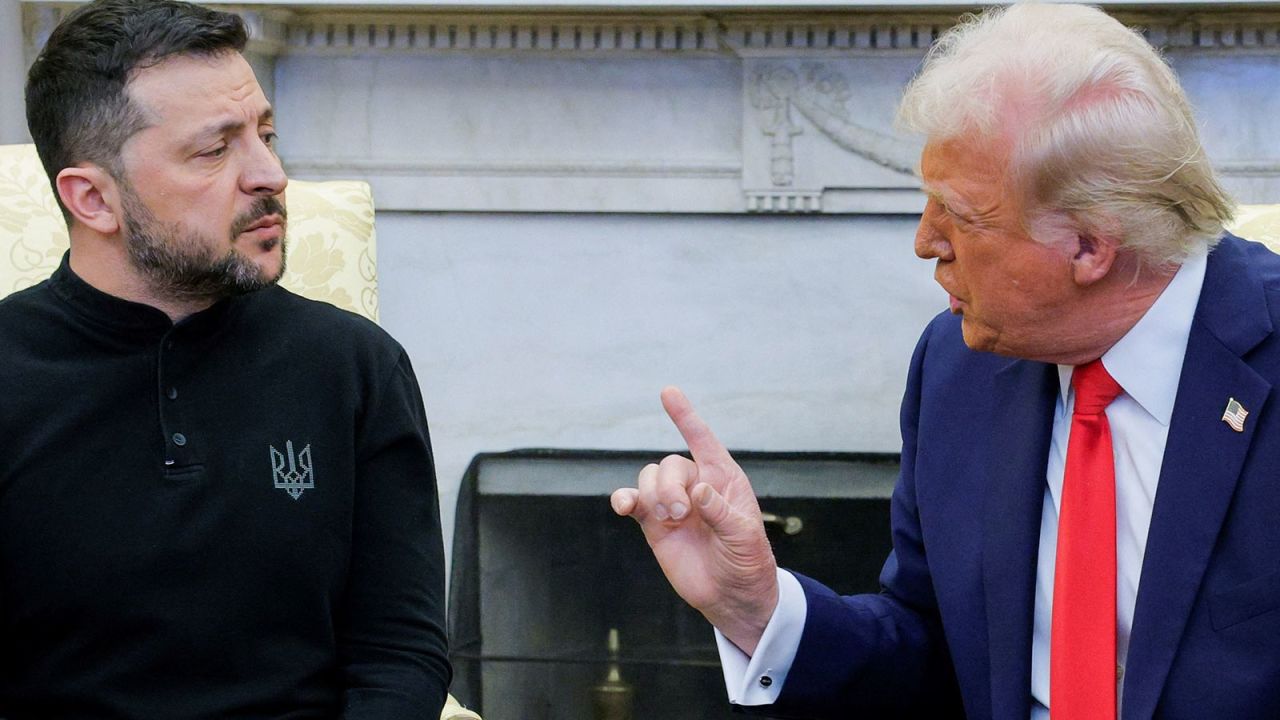
From Iran to Ukraine and international justice, Donald Trump’s policies are facing growing resistance abroad. Tehran rejects Washington’s position on the Strait of Hormuz, Kyiv refuses to accept U.S. pressure and criticism of Volodymyr Zelensky, while threats against the International Criminal Court are seen as a challenge to the global system of accountability. At the center of the debate is the question of the limits of American influence, unilateral actions, and attempts to impose political solutions amid war. This article was prepared based on reports by La Unión Digital (Venezuela), Sinaloa Hoy (Venezuela), and Bastion (Venezuela).
Energy Truce and the Dispute Over Ukraine’s Sovereignty
Donald Trump’s statements about a possible partial ceasefire between Russia and Ukraine related to attacks on energy infrastructure have sparked a new dispute over who has the right to negotiate an end to the war—and under what conditions. At the center of the discussion are Russian oil refineries, diesel supplies, sanctions, fuel prices in the United States, and Kyiv’s fundamental position: decisions about Ukraine’s future cannot be made without Ukraine.
According to Argentina’s La Unión Digital, Trump announced an agreement that was supposed to cover a halt to attacks on energy facilities. However, Volodymyr Zelensky indicated that the announcement came as a surprise to him. According to Axios journalist Barak Ravid, the Ukrainian president said: “The announcement of the ceasefire was news to me.”
Zelensky stressed that Kyiv would be prepared to accept such an arrangement only if Russia had genuinely endorsed it and if the parties were given clear terms and a start date for the truce. This discrepancy between Trump’s public statement and the Ukrainian side’s reaction became one of the clearest signs of the uncertainty surrounding the initiative.
In an article published by Mexico’s Sinaloa Hoy, the conflict is presented as part of a broader breakdown of trust between Kyiv and Washington. Zelensky rejects the possibility of agreements with Moscow reached at the expense of Ukraine’s territorial integrity and political future. His position is stated in unequivocal terms: “Ukraine’s freedom is not up for negotiation.”
The Ukrainian leader also offered a critical assessment of the proposed U.S.-Russian energy agreement involving Russian diesel fuel. In his view, such an arrangement would be “weak and unfair”: concessions to the Kremlin, Zelensky believes, would not bring peace closer but could instead increase instability. In this context, his refusal to make territorial or political concessions is not merely a diplomatic position, but also a response to fears that major powers may discuss Ukraine’s future without its full participation.
The Uruguayan publication Bastión offers an even harsher interpretation of events. In its account, Trump links the cessation of Ukrainian attacks on Russian oil refineries to the risk of shortages and rising fuel prices, particularly amid tensions between the United States and Iran. At the same time, according to the article, the U.S. president called for a new leader to emerge in Ukraine: “I suggest finding a new leader who can make a deal.”
Zelensky responded to such calls by invoking the right of Ukrainian society to determine its own leadership: “It is for our society, our people, to choose one leader or another.” In wartime, amid daily attacks and martial law, the question of elections is not simply a domestic political issue; it has become part of the struggle for sovereignty and resistance to external pressure.
Energy plays a particularly important role in this story. According to the reports, Trump is seeking an end to attacks on Russian oil infrastructure, fearing the consequences for the fuel market. The Ukrainian side, in turn, is proposing reciprocity: Kyiv is ready to stop attacking Russian energy facilities if Russia stops destroying Ukraine’s energy infrastructure. Thus, oil, diesel, and refineries have become not only economic assets, but also instruments of war, pressure, and negotiation.
Against this backdrop, Ukraine’s Western partners appear divided. While Trump, according to the reports, is seeking a pragmatic energy settlement, the European Union intends to continue applying sanctions pressure on Russia. EU foreign policy chief Kaja Kallas said: “Now is not the time to ease pressure on Russia, and Europe will not do so.”
For Venezuela, whose economy and international relations have been closely tied to the oil sector, sanctions, and access to export markets for decades, this debate has indirect but significant implications. The possible easing of restrictions on Russian diesel demonstrates how flexibly Washington can revise its sanctions policy when domestic fuel prices, energy security, or electoral calculations become priorities.
In Caracas, this episode may be seen as confirmation that sanctions often depend not only on declared principles, but also on geopolitical and economic interests. Restrictions on Venezuela’s oil sector, licenses for foreign companies, and the country’s access to markets have likewise repeatedly become subjects of political bargaining between Caracas and Washington.
At the same time, the original reports contain no direct reaction from Venezuelan authorities, local experts, or political forces. The Argentine, Mexican, and Uruguayan articles do not express Venezuela’s official position; instead, they examine statements by Trump, Zelensky, European officials, and media reports. A Venezuelan interpretation can therefore only be analytical—framed through the issues of oil, sanctions, foreign intervention, and the vulnerability of countries whose fate depends on decisions made by major powers.
The central question remains the same: can an energy truce become a step toward a genuine reduction in violence, or will it turn into a deal that protects fuel markets and the interests of major players without ensuring Ukraine’s security or its right to determine its own future?