
Syria’s Ministry of Emergency and Disaster Management said Thursday evening that the death toll from flash floods and flooding in the countryside around Raqqa and Deir ez-Zor had risen to five, four of them children. The tragedy followed heavy rains that battered the country’s eastern provinces. According to the ministry, one child drowned in a body of water in the village of Hanida, west of Raqqa; two children drowned in a pond in the village of Abu Hayya in the Ain Issa area, north of Raqqa; and another child drowned in a body of water in the village of Hammar al-Ali, west of Deir ez-Zor. The fifth victim was a civilian man near the Suleimani Bridge; preliminary reports indicate he was killed in a traffic accident in the area.
Five people, including two children, remain missing. Search efforts were underway in the Khreibisha area on the Deir ez-Zor–Palmyra highway, near Suleimani Bridge, in the village of Hatuniya east of Aleppo, and in Manbij. The Syrian Civil Defence rescued 25 civilians who had been cut off by floodwaters or whose vehicles were stranded in the water, and helped evacuate 375 families from affected camps. In addition, seven bridges, ferry crossings, and unpaved roads were put out of service. Rescue operations covered Aleppo, Raqqa, Deir ez-Zor, Hama, Homs, and Latakia, with support from engineering equipment and specialist services.
The ministry said it had received more than 350 reports of incidents and was responding according to priority: first, threats to life; then the protection of property and the maintenance of roads and public facilities. The Syrian Civil Defence also reported that army helicopters took part in rescuing Interior Ministry road-safety personnel after their vehicles were swept away on the road between Palmyra and Deir ez-Zor. Field teams continue to search for the missing and evacuate families from danger zones.
Throughout October, the authorities repeatedly warned of heavy rain and thunderstorms in Raqqa, Deir ez-Zor, and Hasakah, amid severe infrastructure deterioration following the 2011–2024 war. Minister of Emergency and Disaster Management Raed al-Saleh said response teams were continuing their work and had raised readiness levels along the Syrian coast because forecasts called for further downpours. He urged people not to take risks or cross streams or floodwaters, even when shallow, and to follow Interior Ministry instructions about closed roads and alternative routes.
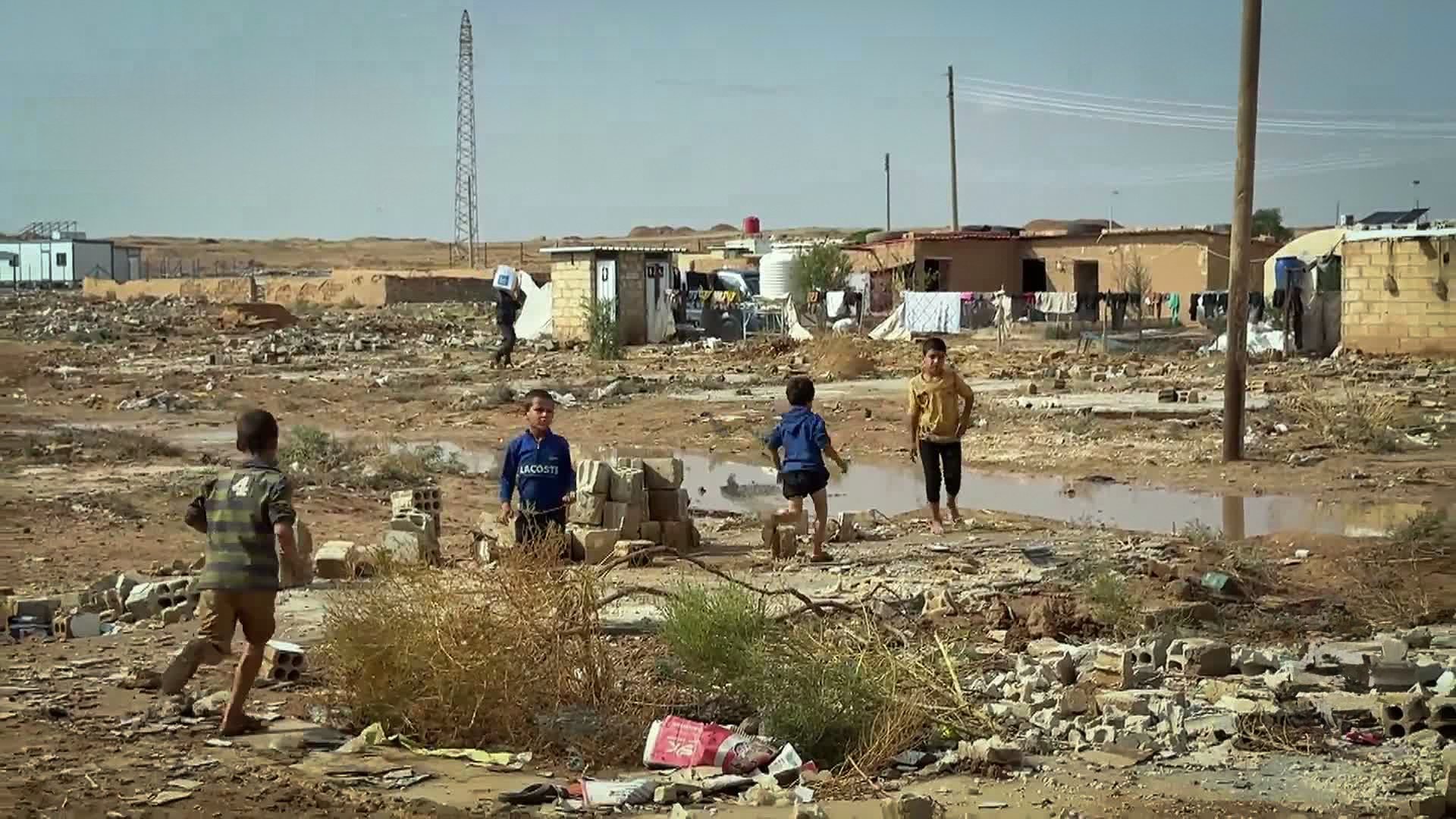
Reports from the Ras al-Ain camp in Hasakah province, in Syria’s far northeast, said rainwater had flooded displaced people’s tents; residents were carrying out their belongings and leaving for relatives’ homes in the city of Hasakah. Flash floods struck Raqqa, Deir ez-Zor, and Hasakah from Wednesday evening until Thursday morning, with the heaviest damage in Raqqa and Deir ez-Zor. Searches are continuing for a person who went missing after trying to rescue children from a car west of Raqqa. There were also reports that water had closed the highway between Deir ez-Zor and Damascus in desert areas. Meteorologists expect another wave of flooding overnight and through Friday, so emergency services remain on high alert.
Comments on the news
What is the Syrian Civil Defence, and how does it relate to the Ministry of Emergency and Disaster Management—are they parallel bodies, or is one subordinate to the other? — The Syrian Civil Defence, often known as the White Helmets, is a volunteer humanitarian organisation that carries out search-and-rescue operations, evacuations, firefighting, and assistance after building collapses; it is not a regular government agency. The Ministry of Emergency and Disaster Management is an administrative body of the opposition’s “Salvation Government” in northwest Syria. They are therefore neither two equivalent government bodies nor simply a case of one being subordinate to the other: the Civil Defence operates as a rescue NGO and coordinates with the ministry and other authorities in opposition-controlled areas, but is not formally one of its departments.
What is the Ras al-Ain camp in Hasakah province, and why do displaced people still live in tents there years after the active phase of the conflict? — It is a camp for internally displaced people near the border town of Ras al-Ain in northeastern Syria’s Hasakah province. People remain in tents because returning home is still unsafe or impossible: homes have been destroyed, areas remain unstable, political and legal restrictions are in place, security risks persist, and funding and services in the camp are limited. Durable solutions—including housing reconstruction, compensation, and guarantees for safe return—have yet to be put in place.
Where is Suleimani Bridge, and why is the Deir ez-Zor–Palmyra highway important for local travel and rescue operations? — Suleimani Bridge is on the Deir ez-Zor–Palmyra highway, in the western part of Deir ez-Zor province and the Syrian Badia. It is one of the crossings on the desert stretch connecting the city with Palmyra and the central regions. This route is important because it serves remote communities, is used by humanitarian and rescue convoys, and provides a shorter route for ambulances. If the bridge is damaged or the highway is closed, local residents become more isolated, and aid deliveries and evacuations are delayed.


Full version: Five dead in floods in eastern Syria, hundreds of families evacuated